OBSERVATION AS MEDIUM
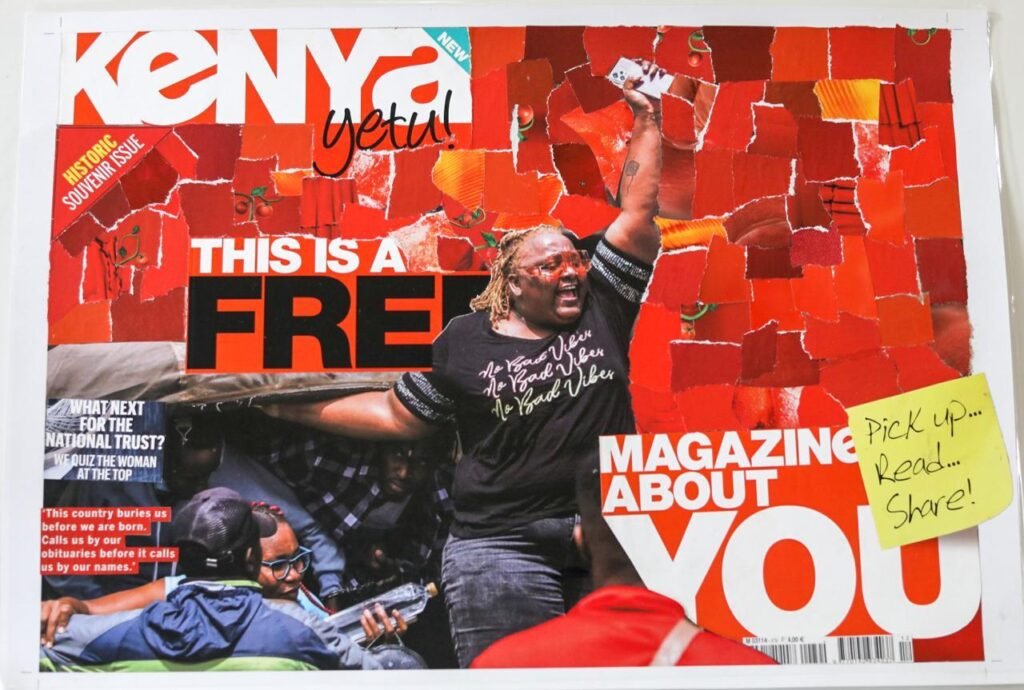
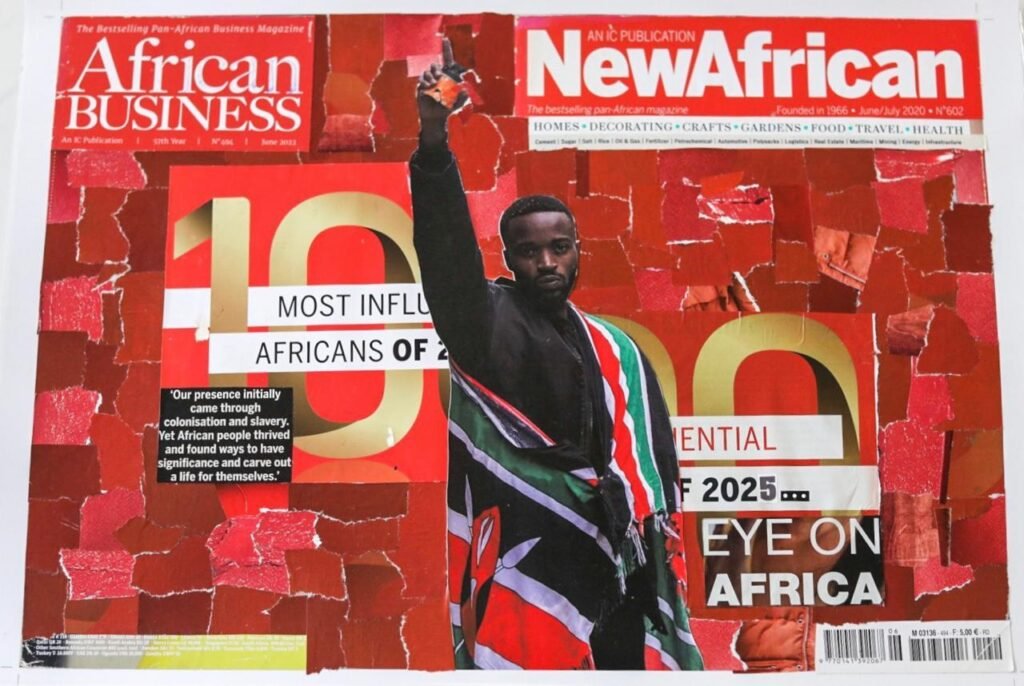
This document defends a project and shares a process. It argues that observation is a medium, not just looking, but a relational, political, and body-based practice. Observation can reshape how artists move through environments, communities, and collaborations. The project unfolded through a self-sponsored residency in Kajiado, Kenya. Co-living, mimicry, walking, resting, and collecting objects became methods. The research also examines the June 2024 Finance Bill protests, using collage (cigarette packs, receipts, warning labels, sudoku grids) and AI-assisted reconstruction to ask: What is freedom? What is home? Who belongs?
The budget was small. That constraint did not weaken the work. It became the work.
Conclusion: Observation, done slowly and relationally, becomes care. Start where your feet already are.
KEYWORDS: observation as medium, soft witnessing, nervous-system citizenship, self-sponsored residency, Forging Urban Citizenship, Game of Protests, Kenyan urban life, collage, AI-assisted reconstruction, collective memory, limited resources as method
Introduction // Observation Before Understanding ↓
INTRODUCTION: OBSERVATION BEFORE UNDERSTANDING
I think the project understood me before I understood it.
When I first received the acceptance email for the University of Glasgow project, the phrase Forging Urban Citizenship sent my mind straight to physical cities. Architecture. Class systems. Movement. The visible politics of space. I thought citizenship was about infrastructure and access.
I was wrong. Not entirely but deeply enough that the project would spend months correcting me.
At the same time, I was navigating personal transitions. The real understanding came later. Not through theory or preparation. Through lived experience: getting lost on a road to Kajiado, being told to turn, arriving somewhere unfamiliar that somehow felt safe, and then staying long enough to watch how someone else moves through the world.
1.1 This document does two things:
1. Presents the project - explains what we made, why it matters, and how observation became our medium
2. Shares the process - so future collaborators, funders, or curious strangers can see how five people with a small budget and a big question built something worth looking at
1.2 A Note on the Budget (This Matters)
The commission money from the University of Glasgow was allocated to me, Muthoni Mwangi, as the lead artist.
But I made a choice. To deepen the narrative - and because classism was already at the heart of what we were investigating - I invited four other creatives to join. Friends. Long-term collaborators. People I had worked with before.
We split the money. Not equally. According to labour, time, and process costs. Each of us received a small share.
That constraint - limited resources - did not weaken the work. It became the work.
You cannot make art about classism while hoarding resources. You cannot ask honest questions about labour while paying yourself everything and others nothing. The small budget forced creativity, collaboration, and trust. It also told the truth: most artists work with very little. That is not a failure. That is the material.
The budget is not a footnote. It is part of the argument.
1.3 Who This Document Is For
· Academics who want rigour without the performance of citations
· Artists and curators who need permission to treat ordinary life as fieldwork
· Future funders and partners who want to understand how we work
· My collaborators - Zavai, Jabez, Tracy, and Jeremiah, so they can see their labour named and honoured
· Anyone who has ever felt uncertain about where they belong
Chapter One // The Self-Sponsored Observation Residency ↓
CHAPTER ONE: THE SELF-SPONSORED OBSERVATION RESIDENCY
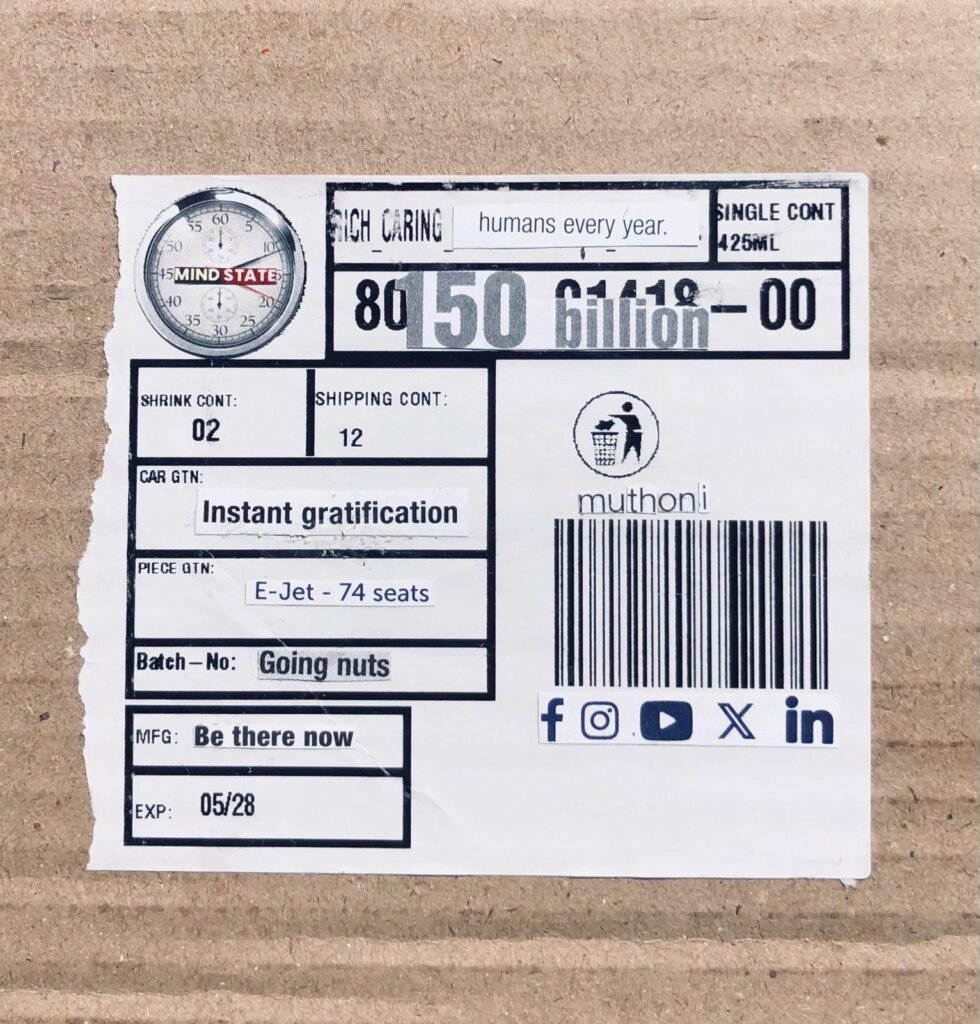
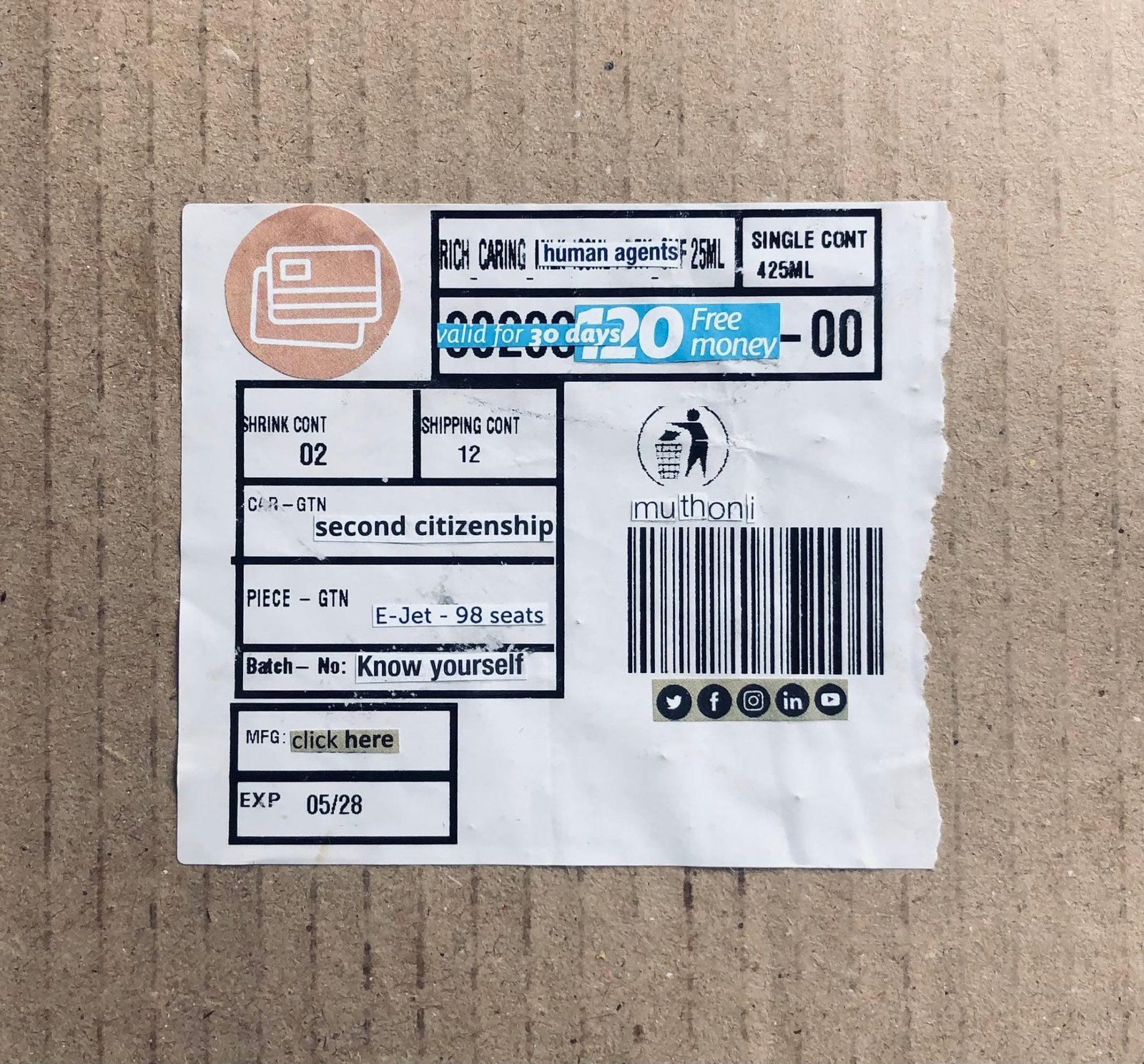
What does it mean to carry a "Made in" label as a person? What hypothetically expires after 05/28? And what does it take to know yourself when your paperwork is always in transit?
From the artist's exploration series, second piece
2.1 How the Residency Began
The observational phase of this research did not begin inside a gallery, a university, or any institution that had granted me permission to observe.
It began with following.
I had already spent weeks observing Zavai - a nomad, creative director and visual artist before I ever travelled to Kajiado. I watched her relationship to movement, temporary homes, community, and creative practice. I noticed how she rested. How home for her was not a single address but a network of relations distributed across locations.
After she stayed at my mother's house, and after watching her ease into that space, I travelled to Kajiado to continue observing more intentionally.
Somewhere along the journey, I got lost.
Almost two hours in, I realized I had taken the wrong direction. The landscape did not match what I had imagined. When I sent Zavai a photograph of my location, she responded simply:
Turn.
That word became central to the entire project. Not because it solved the problem immediately, I was still disoriented but because it introduced a structure of trust. Someone on the other end knew where I was supposed to go. I only needed to listen.
We will return to turn repeatedly. As orientation. As surrender. As the opposite of mastery.
2.2 Defining the Self-Sponsored Residency
When I finally arrived in Kajiado, the environment did not feel familiar. Yet despite that or perhaps because of it, it immediately felt safe.
The residency was informal and self-directed. No institutional structures determined how observation should happen. No ethics board approved my methods in advance. No funding body required deliverables by a certain date. No host institution provided housing or meals or a letter of affiliation.
Self-sponsored means: I funded the travel myself. I arranged my own accommodation. I determined my own schedule. I answered only to the relationships I was inside.
This is not how most research is conducted. Most research is institutionally sponsored which provides legitimacy, resources, and ethical oversight, but also imposes timelines, frameworks, and power dynamics that can distort what you are trying to see.
The self-sponsored residency is different. Slower. More uncertain. More dependent on trust. It produces knowledge that is harder to generalize but easier to inhabit.
That was the methodological choice I made, even before I had words for it.
2.3 Co-Living as Fieldwork
The first weeks in Kajiado were shaped by adaptation.
We learned:
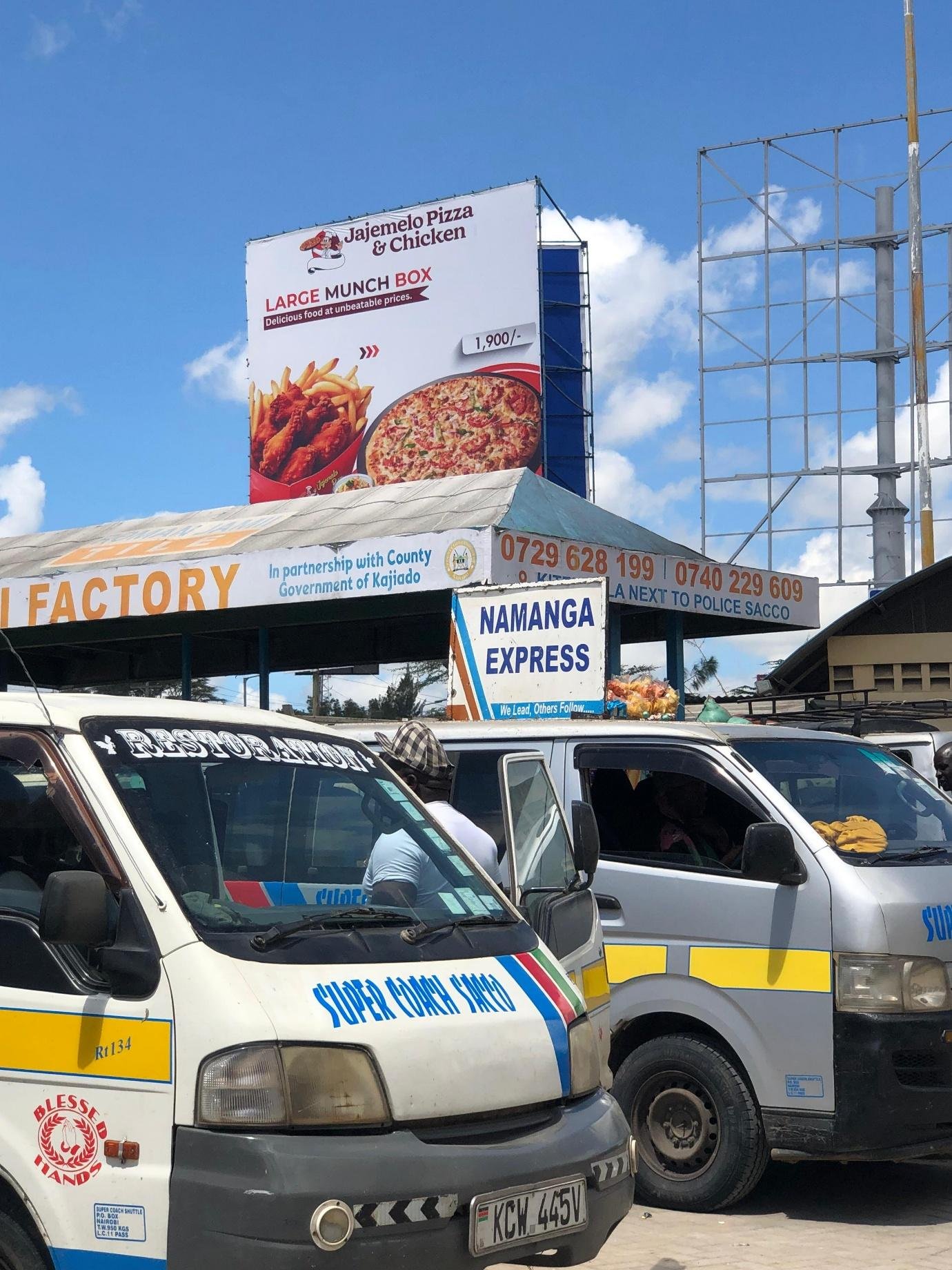
How transport systems operated locally (which matatus ran when, which routes were reliable) Which boda riders to call (their names, their numbers, who would show up at night) How weather patterns shifted unpredictably (dust storms, sudden rain, heat that changed how you moved through the afternoon) Where to source food (the nearest market, which vendors remembered your face) How daily rhythms differed from Nairobi (slower mornings, earlier darkness, a different relationship to time)
These are not typically listed as research methods. In a conventional thesis, they would appear in an appendix or a footnote. But within this project, adaptation was the research. You cannot observe a place until you have learned how to be in it without exhausting yourself.
Over time, the unfamiliar environment softened. The residency slowly became a study of slowness, safety, and internal grounding.
2.4 What Co-Living Made Visible
Living alongside Zavai rather than visiting her for scheduled interviews revealed dimensions of her practice that no questionnaire could have accessed:
Morning routines Sourcing breakfast Long walks (walking as thinking, walking as settling) Resting (not as a break from work but as a condition for it) Conversations about uncertainty Collaborative brainstorming Observing weather patterns Greeting neighbours Adapting temporary spaces into places of comfort Collecting objects during walks Periods of silence
This list is not exhaustive. It is an offering: observation as attention to the ordinary.
2.5 The Shift from Urgency to Slowness
At the beginning, I approached the work from urgency and fear. I wanted answers. I wanted to produce something recognizable. I wanted to justify the time I was spending.
But the process became lighter once I allowed myself to believe that I deserved to occupy the spaces I had entered.
The slower I moved, the more observant I became.
The safer I felt, the more clearly, I could see.
This relationship between observation and internal safety will return in Chapter Four. For now: the self-sponsored residency made safety possible in a way that institutional research often does not.
2.6 Limitations and Ethical Considerations
No methodology is without limits. The self-sponsored residency has several:
Financial precarity - Self-funding means the research only lasts as long as your resources allow No external accountability - No ethics board to check for harm, which means the researcher must build their own ethical framework Generalizability - What I learned in Kajiado, with Zavai, during this specific period, cannot simply be transferred elsewhere Extraction risk - Even with good intentions, observation can become extraction if the observed person feels used
I address extraction risk through soft witnessing (see Glossary): observation that accompanies rather than captures. Throughout the residency, I checked these questions with Zavai directly. She knew I was observing. She knew I was writing. She contributed her own reflections. This was not covert research. It was collaboration with a transparent frame.
Chapter Two // Observation as Methodology ↓
CHAPTER TWO: OBSERVATION AS METHODOLOGY
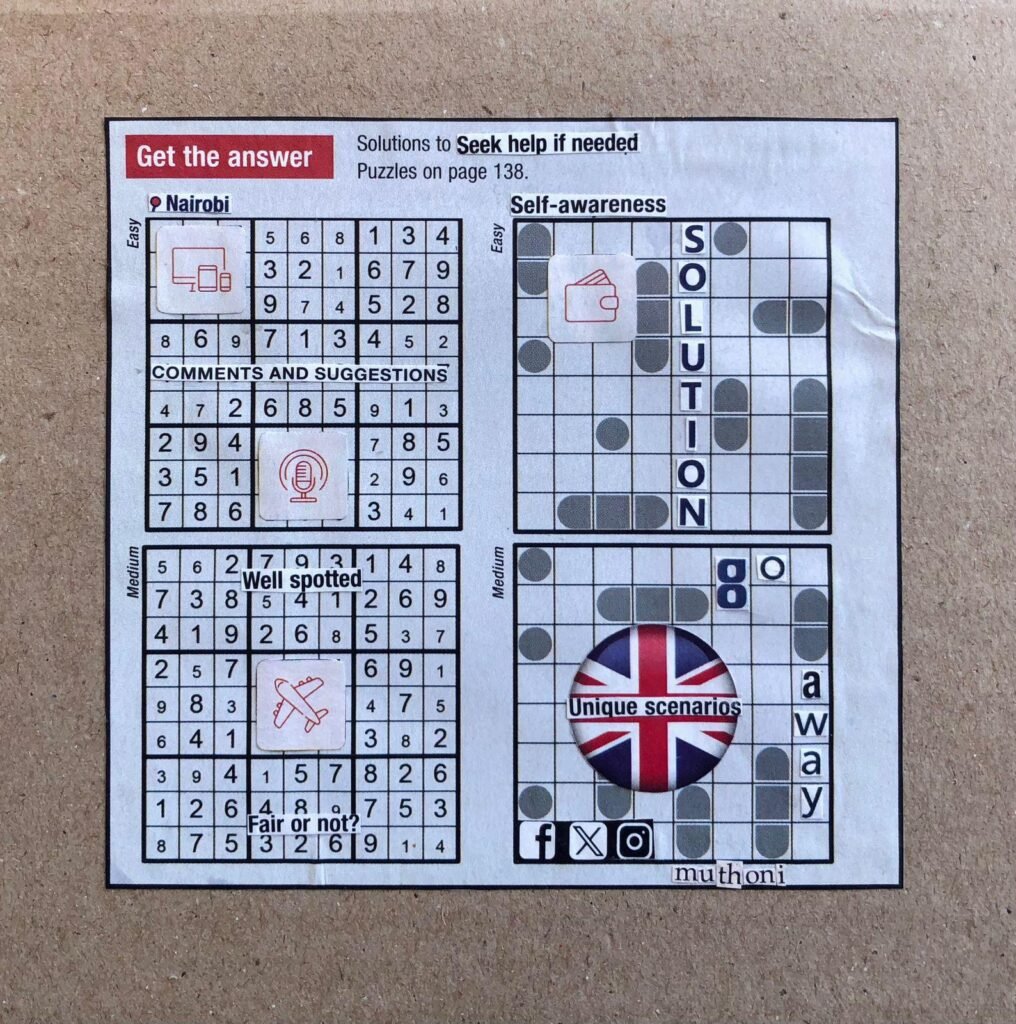
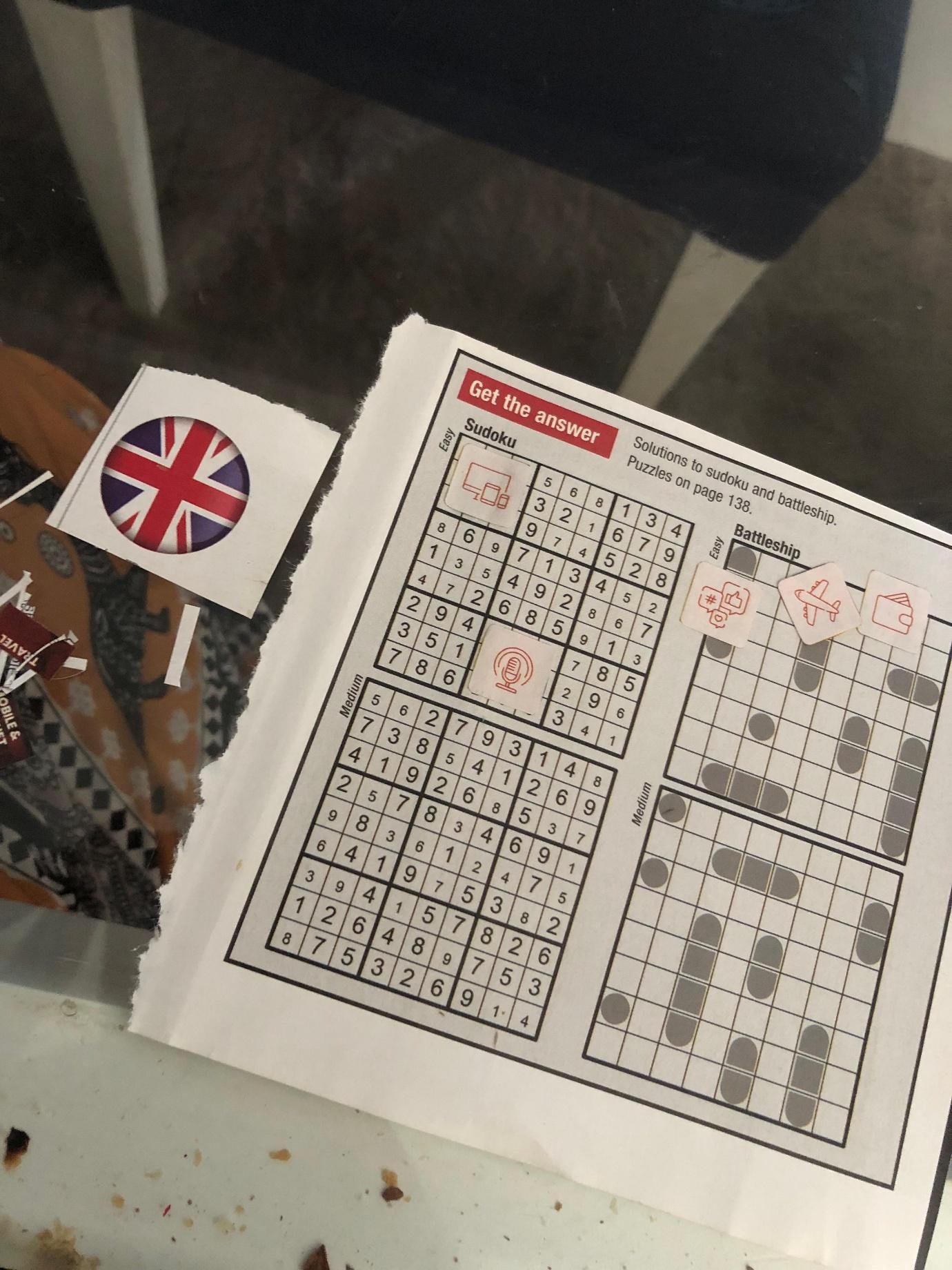
What you are looking at is another exploration art piece. Same narrative, same questions about home and movement, but a lighter note this time. I used a sudoku grid as the canvas. Because in the last two weeks of observing Zavai, I realized she plays sudoku constantly. On breaks. At midnight. While waiting. Before starting work.
From the artist's exploration series, fourth piece
3.1 Beyond Passive Looking
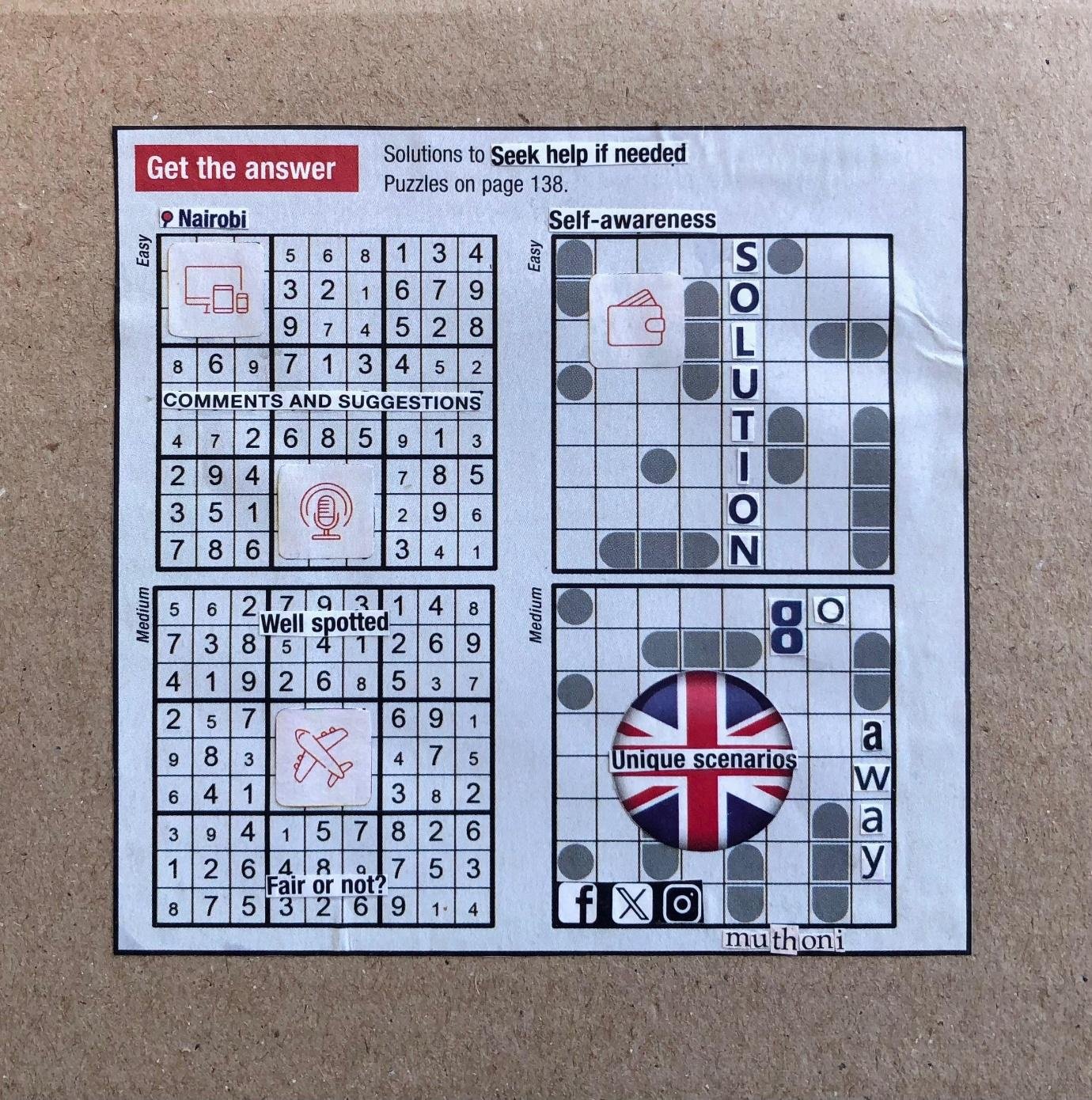
Observation, within this project, moved beyond passive looking.
It was never about standing at a distance and recording what happened. That kind of observation is detached, clinical, hard and belongs to an older model of research. The fly on the wall. The neutral instrument. The eye without a body.
I had no interest in that.
Instead, observation became a participatory and embodied methodology rooted in prolonged exposure to movement, routine, collaboration, and environment. I did not observe Zavai from across a room. I lived alongside her. I woke up in the same spaces. I walked the same paths. I sat in silence when she sat in silence. I collected objects when she collected objects.
This is not participant observation in the traditional ethnographic sense where the researcher temporarily joins a community while maintaining analytical distance. This was closer to accompaniment: being there without an agenda, staying present without demanding access, learning through proximity rather than interrogation.
The trick is to keep watching, even when nothing much happens. To let the world show itself in its own time. This is harder than it sounds. Modern creative culture rewards productivity, speed, and visible outputs. Watching nothing much produces no immediate data. But nothing much is where daily life lives.
3.2 Mimicry as Learning
Observation gradually transformed into mimicry.
Not mimicry as performance or appropriation. Mimicry as a learning mechanism: the body trying on another body's rhythms to understand what they feel like from the inside.
Infants learn through mimicry. Apprentices learn through mimicry. Animals learn through mimicry. But research has largely rejected mimicry as unscientific, subjective, insufficiently distanced. That rejection, I now believe, is a loss.
Over the weeks in Kajiado, I began noticing how certain practices in Zavai's daily life contributed to nervous-system regulation and emotional grounding. I did not just observe these practices. I tried them.
Walking - not walking to somewhere, but walking as settling, walking as thinking Collecting crystals - the act of collecting small, beautiful, tactile objects creates micro-moments of attention and care Cooking slowly - the opposite of efficiency. The body occupied in a way that leaves the mind free to wander or rest Reading without productivity - reading that is not for research, not for citation, not for self-improvement. Reading as pleasure, as escape, as idleness Remaining present within ordinary moments - the hardest practice of all. Not reaching for a phone. Not planning the next thing. Just being where your feet are
I integrated these practices into my own daily rhythm. Not because Zavai prescribed them, but because watching her move through the world made me realize how often I move through the world in a state of low-grade urgency. Mimicry became retraining.
3.3 Nervous-System Attunement as Data
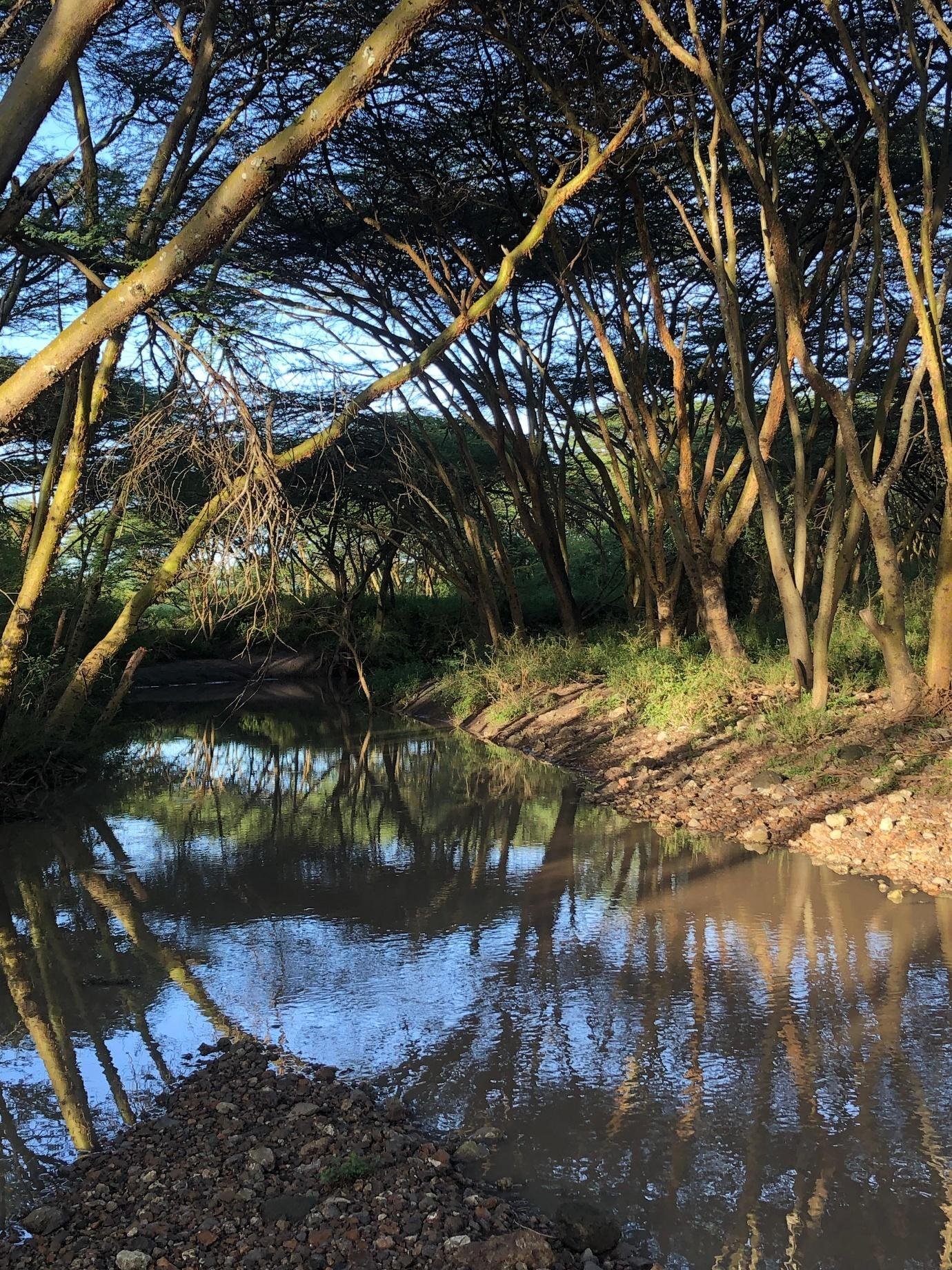
This project produced a kind of data that most research protocols would reject as unscientific: felt sense.
I paid attention to my own nervous system throughout the residency. Not as a distraction from observing Zavai, but as an instrument of observation. When did I feel tightness in my chest? When did my shoulders drop? When did I feel safe enough to stop "performing"?
Here is what I learned
My nervous system relaxed in Kajiado more quickly than it ever had in Nairobi That relaxation was not automatic. It required repeated exposure to the same environment, the same faces, the same routines Safety was not the absence of threat. It was the presence of predictability, softness, and permission to rest When my nervous system was regulated, I saw more clearly. When I was anxious, my observations became defensive, judgmental, or rushed
This is not a methodological confession. It is a methodological argument: the observer's nervous system is part of the research instrument. Pretending otherwise does not make the research more objective. It just makes the researcher less honest.
3.4 The Ethics of Following
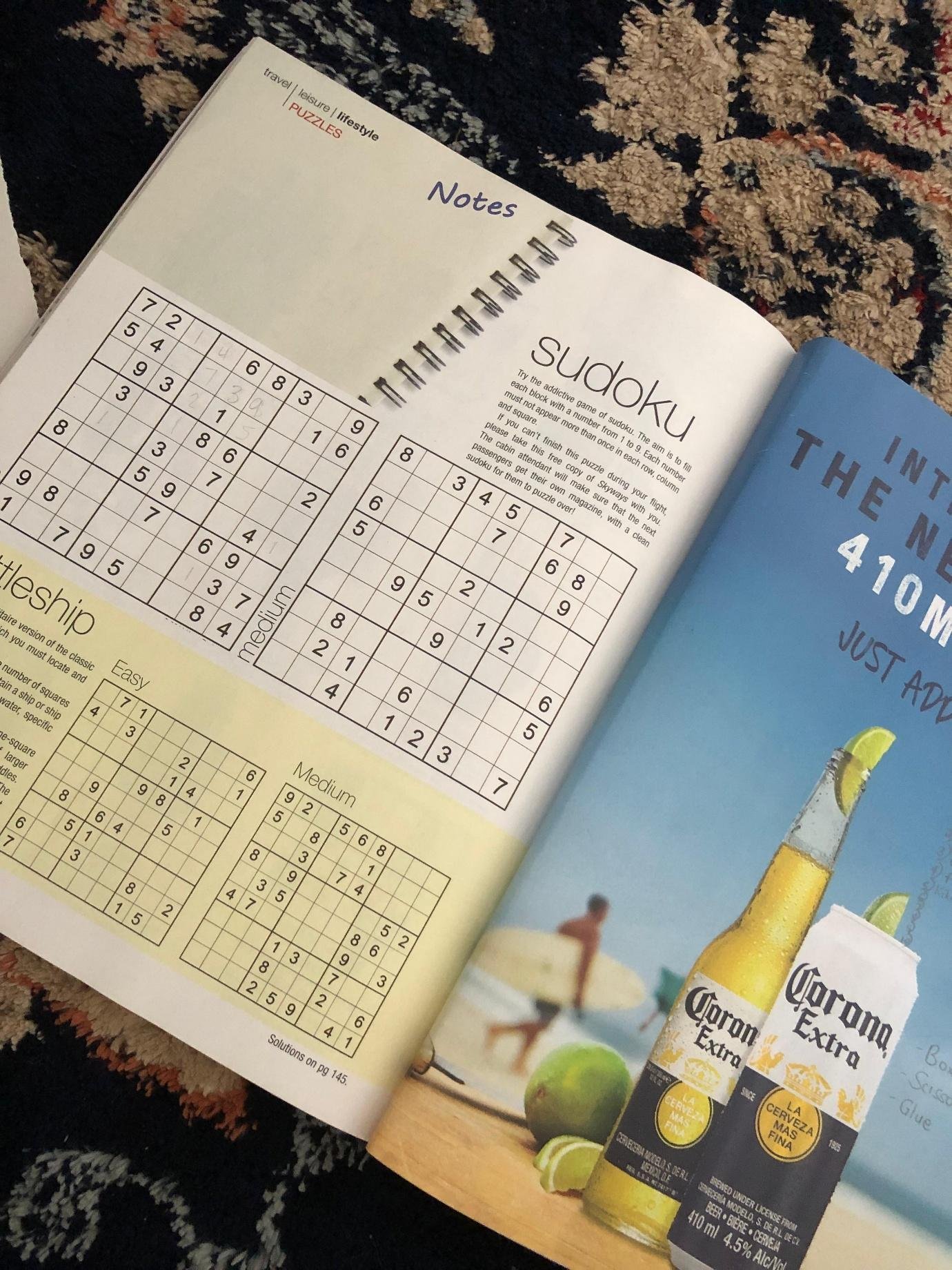
Whom do we have permission to observe? For how long? To what end?
These questions accompanied every day of the residency.
I followed Zavai physically walking the same paths, sitting in the same rooms, resting when she rested. But following is not the same as tracking. Tracking implies surveillance, extraction, knowledge taken without permission. Following implies trust, reciprocity, and the willingness to be led somewhere unexpected.
Throughout the residency, I maintained several ethical practices:
Transparency - Zavai knew I was observing her. We discussed the project openly. Permission to stop - At any point, she could have asked me to stop observing a particular activity. No covert documentation - I did not photograph or record without explicit consent. Reciprocity - I was not only observing. I was also contributing with the house maintenance: which also included cooking, cleaning, brainstorming, providing my own presence as support.
Was this enough to prevent extraction? I cannot answer that definitively. The risk is never zero when one person is designated "researcher" and another "subject." What I can say is that the relationship moved toward collaboration over time. Zavai became a co-inquirer rather than a source of data.
3.5 Observation as Reciprocity
One final dimension: I was observing Zavai, but she was also observing me.
My presence changed her behaviour. She became more reflective about her own routines. She began noticing things about herself that she had not noticed before. Observation was not a one-way mirror but a mutual activation.
What did Zavai observe about me? She observed that I arrived in Kajiado carrying urgency. She observed that I did not know how to rest. She observed that I was looking for home without knowing I was looking. And she did not try to fix any of this. She simply stayed present, modelled alternatives, and waited for me to notice.
That is soft witnessing in practice.
Chapter Three // Game of Protests & Collective Memory ↓
CHAPTER THREE: GAME OF PROTESTS AND COLLECTIVE MEMORY
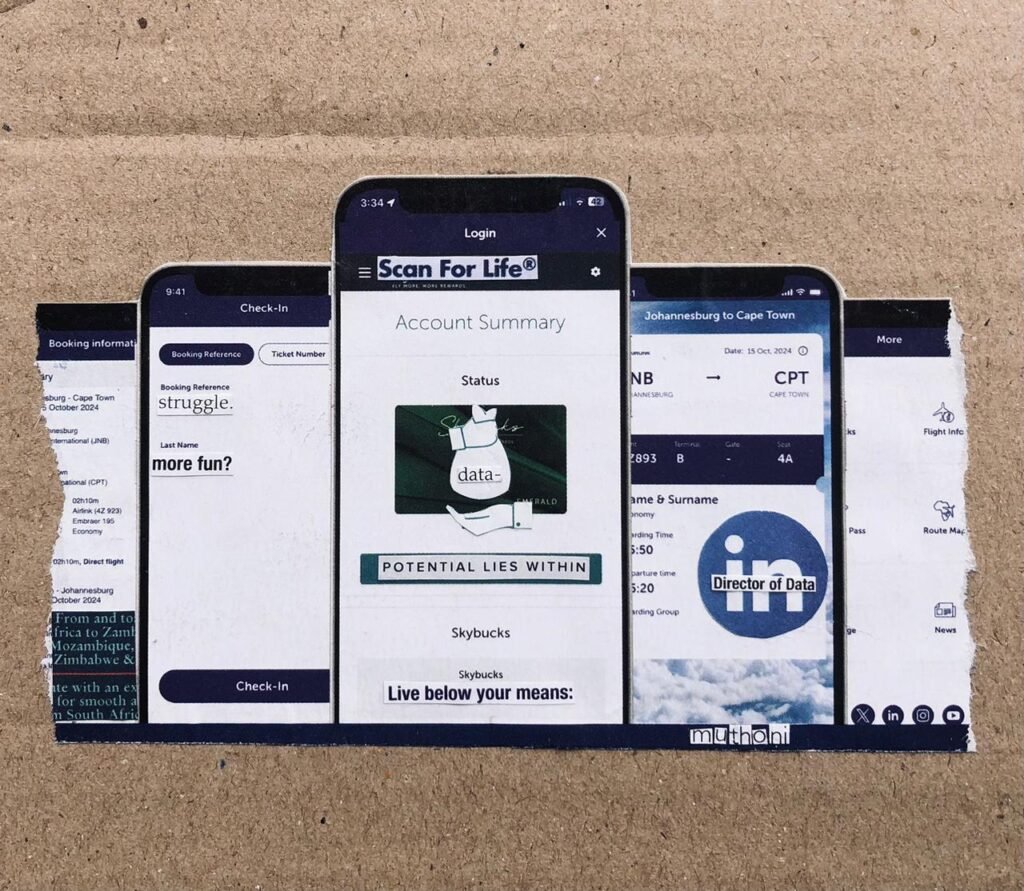
What you are looking at is a system that looks like it's working but the details don't add up. Fragmented. Glitched. Potential lies within. Live below your means. More fun? That's exactly how it feels to love Kenya right now.
From the artist's exploration series, third piece
4.1 The Emotional Aftermath of June 2024
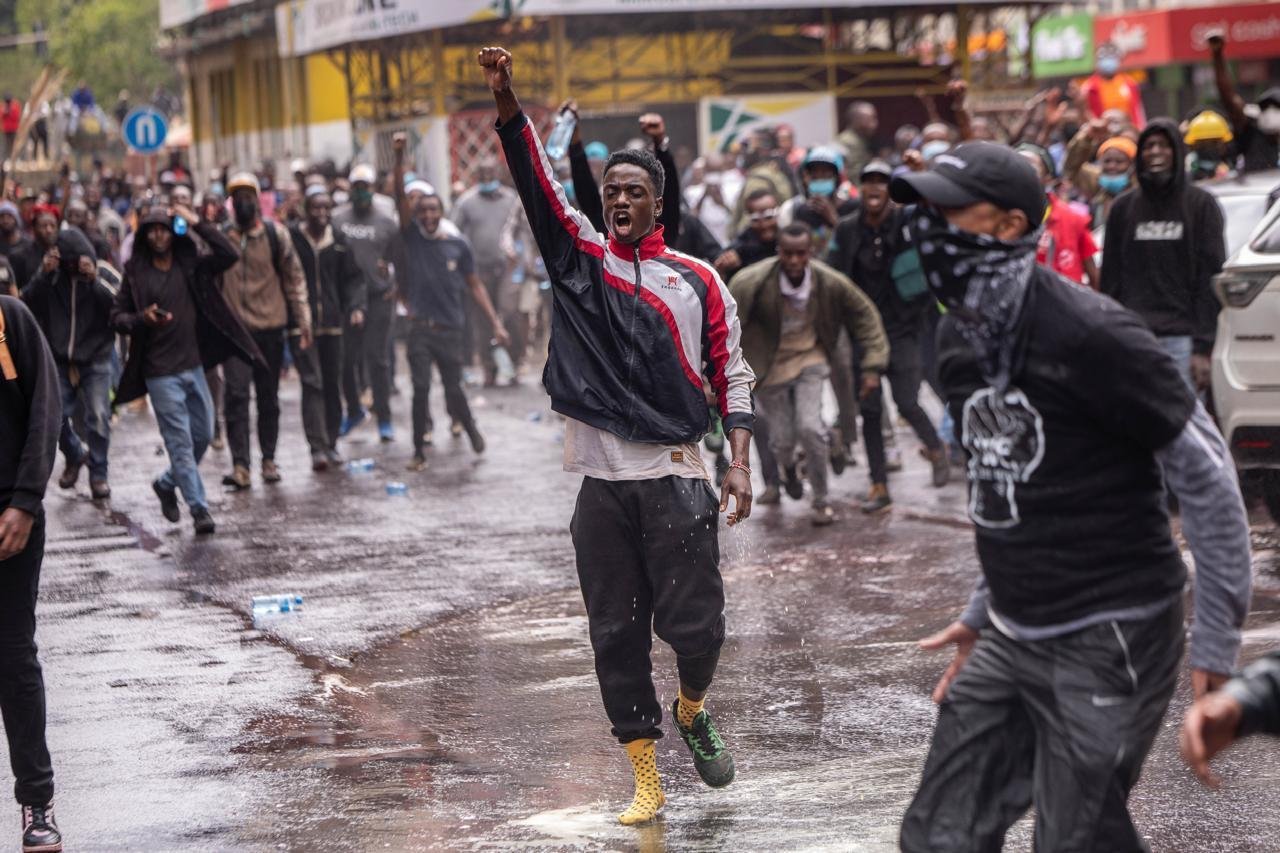
Game of Protests did not emerge from abstract intellectual curiosity.
It emerged from the emotional aftermath of the June 2024 Finance Bill protests in Kenya.
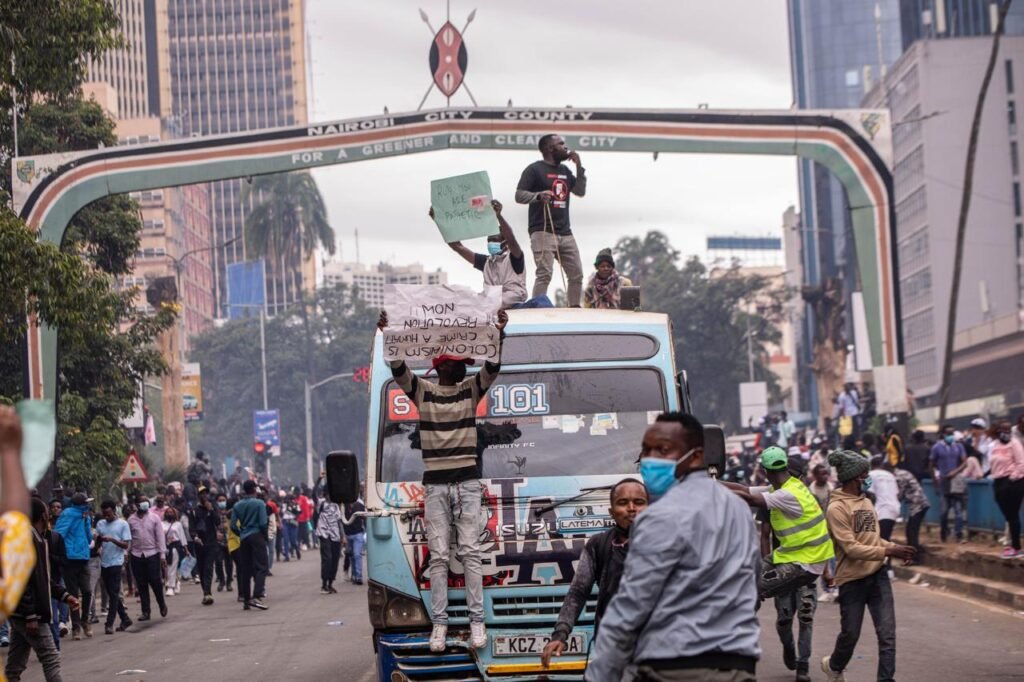
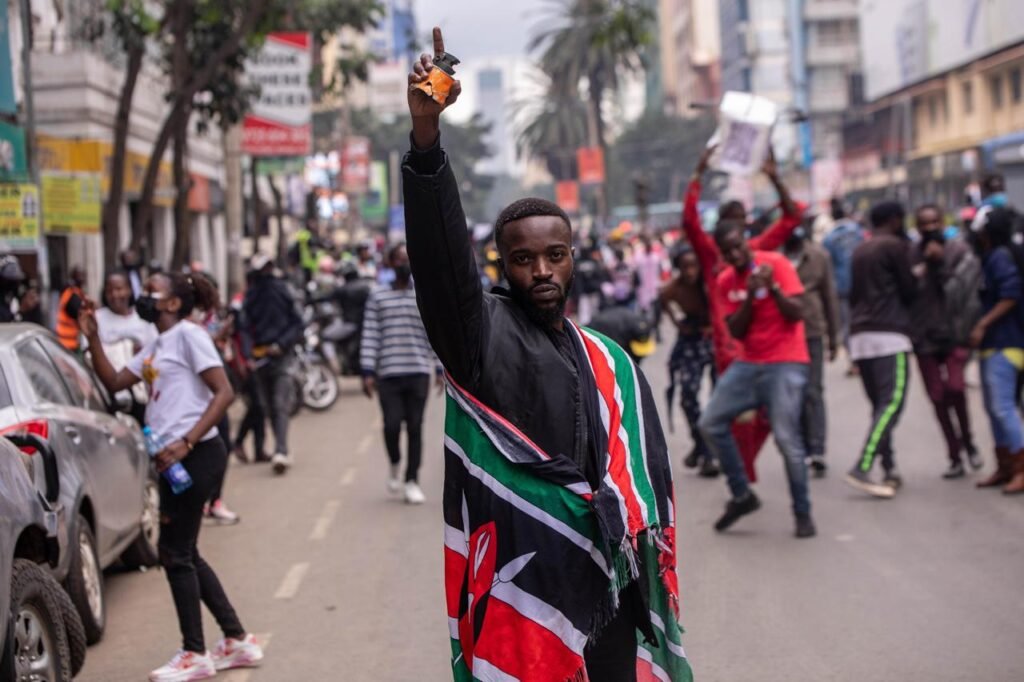
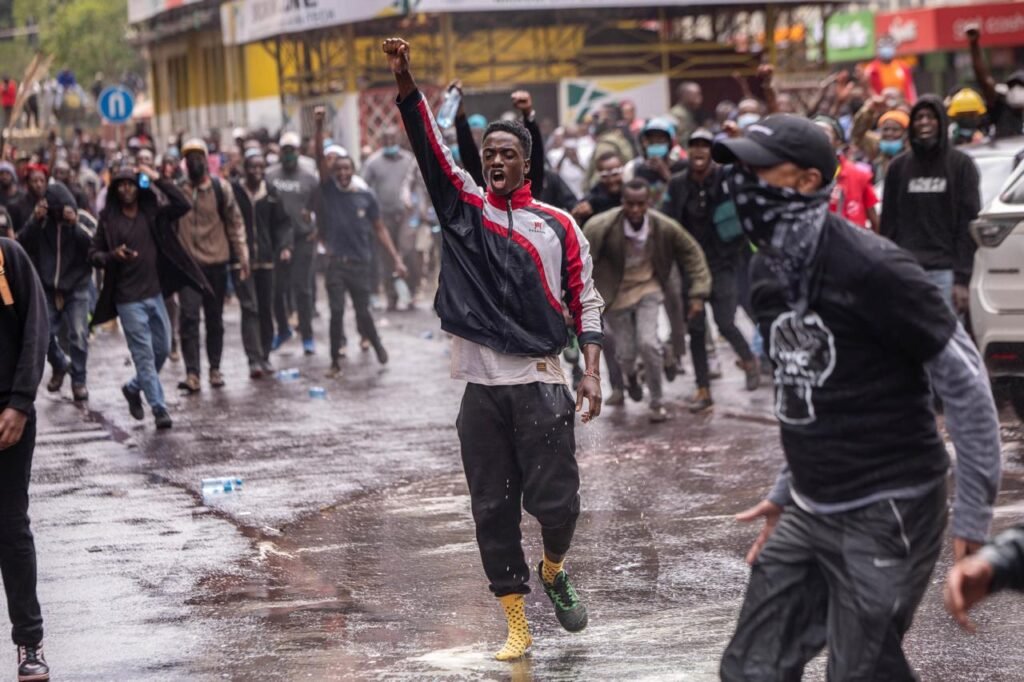
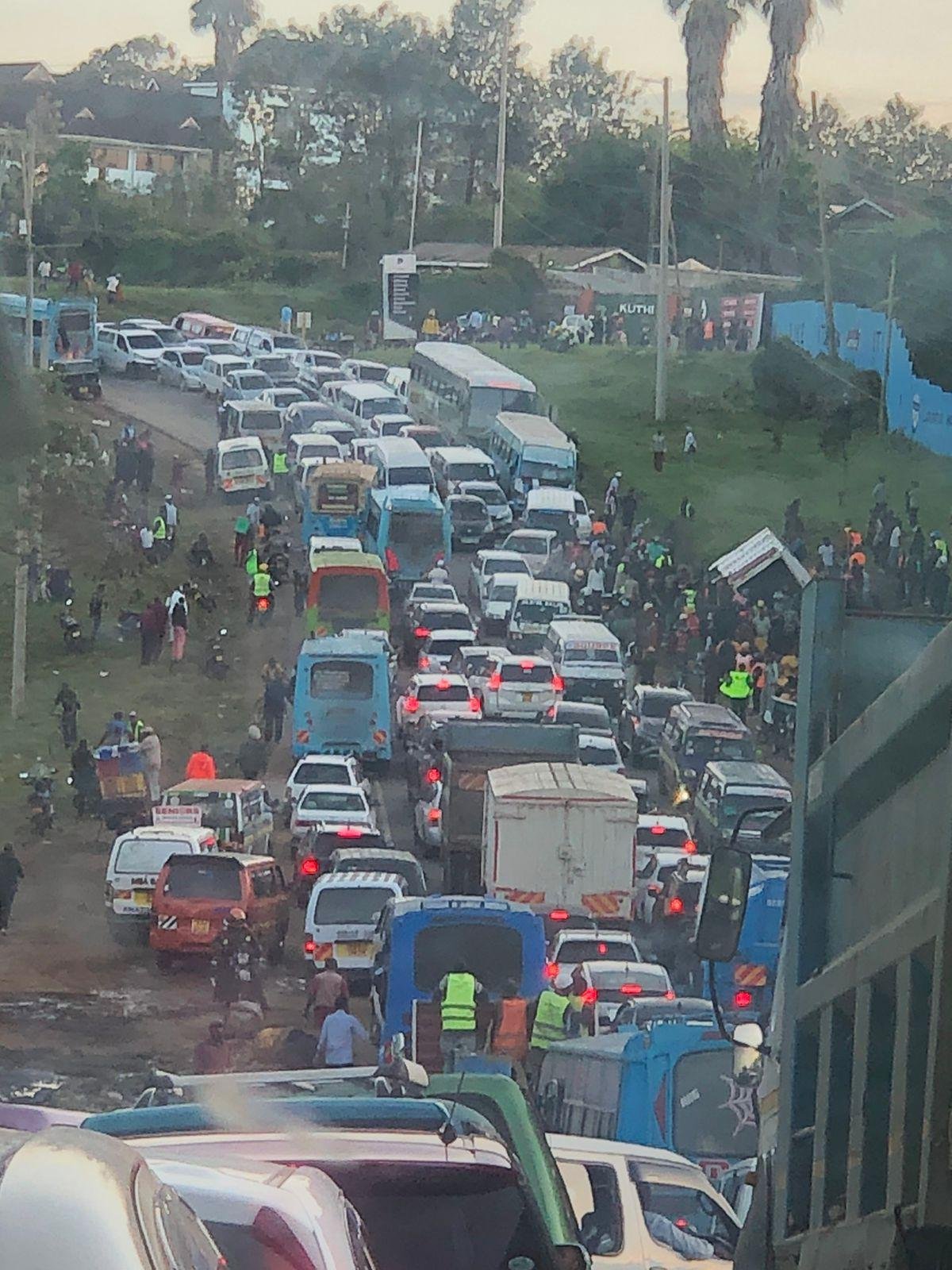
For readers outside Kenya: In June 2024, the Kenyan government introduced a finance bill proposing new taxes and levies that would disproportionately affect ordinary citizens. The response was swift and massive. Citizens took to the streets not as organized political factions, but as a diffuse, self-generated movement of young people, artists, workers, and the unemployed.
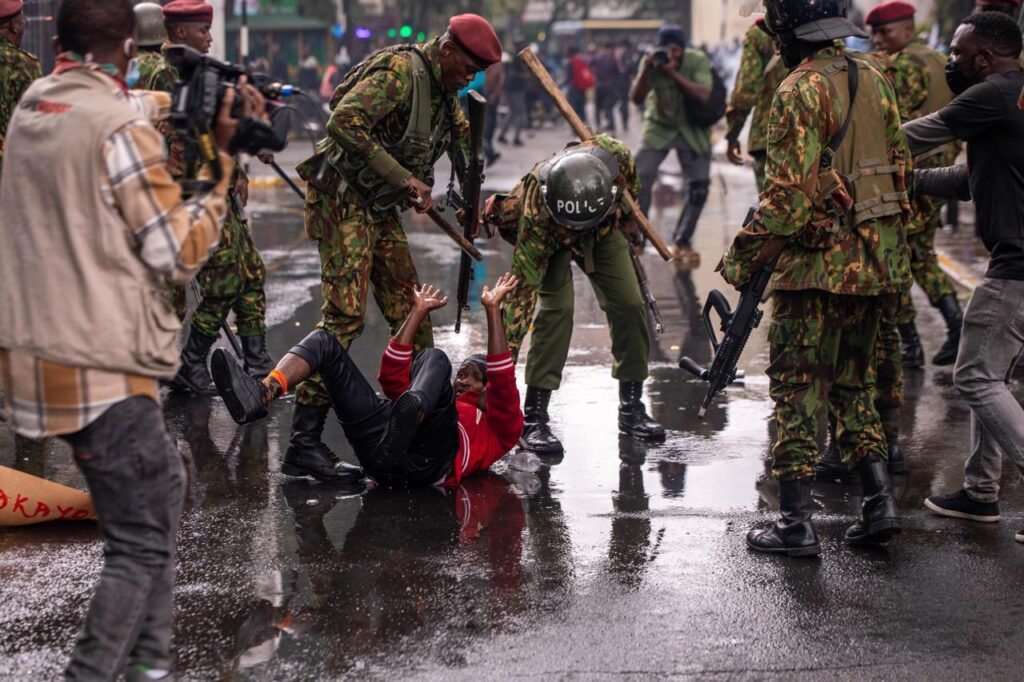
The protests were met with state violence. Tear gas. Bullets. Arrests. Disappearances. The digital sphere became a second front: documentation, mutual aid, evasion strategies, and collective grief circulated alongside memes, humour, and defiance.
By the time the protests subsided the bill was withdrawn, but the damage was done something had shifted in the Kenyan emotional landscape. Hopeful exhaustion is how I have come to describe it. The love for home remained. The willingness to trust the system did not.
Game of Protests was conceived in this atmosphere.
4.2 Protest as Simultaneous Presence
During that period, protest existed simultaneously online and physically.
You could not separate the two. The bodies on the streets were the same bodies posting updates, sharing locations, and debunking misinformation. The tear gas was photographed and uploaded within minutes. The fear was felt in person and transmitted digitally.
This simultaneity changed what observation meant. Observation became unavoidable. Even if you stayed home, you were observing through screens. Even if you were on the streets, you were observing through your own body's fear and exhaustion.
Public space transformed. Streets that had been sites of commerce became sites of assembly, resistance, and state repression. Bodies moved differently walking with purpose, running from gas canisters, forming human chains, lying down in mourning.
Fear, tenderness, exhaustion, and solidarity coexisted visibly.
This was not a theoretical context for the research. It was the emotional water we were all swimming in.
4.3 Jeremiah Onyango: Documentation as Source Material
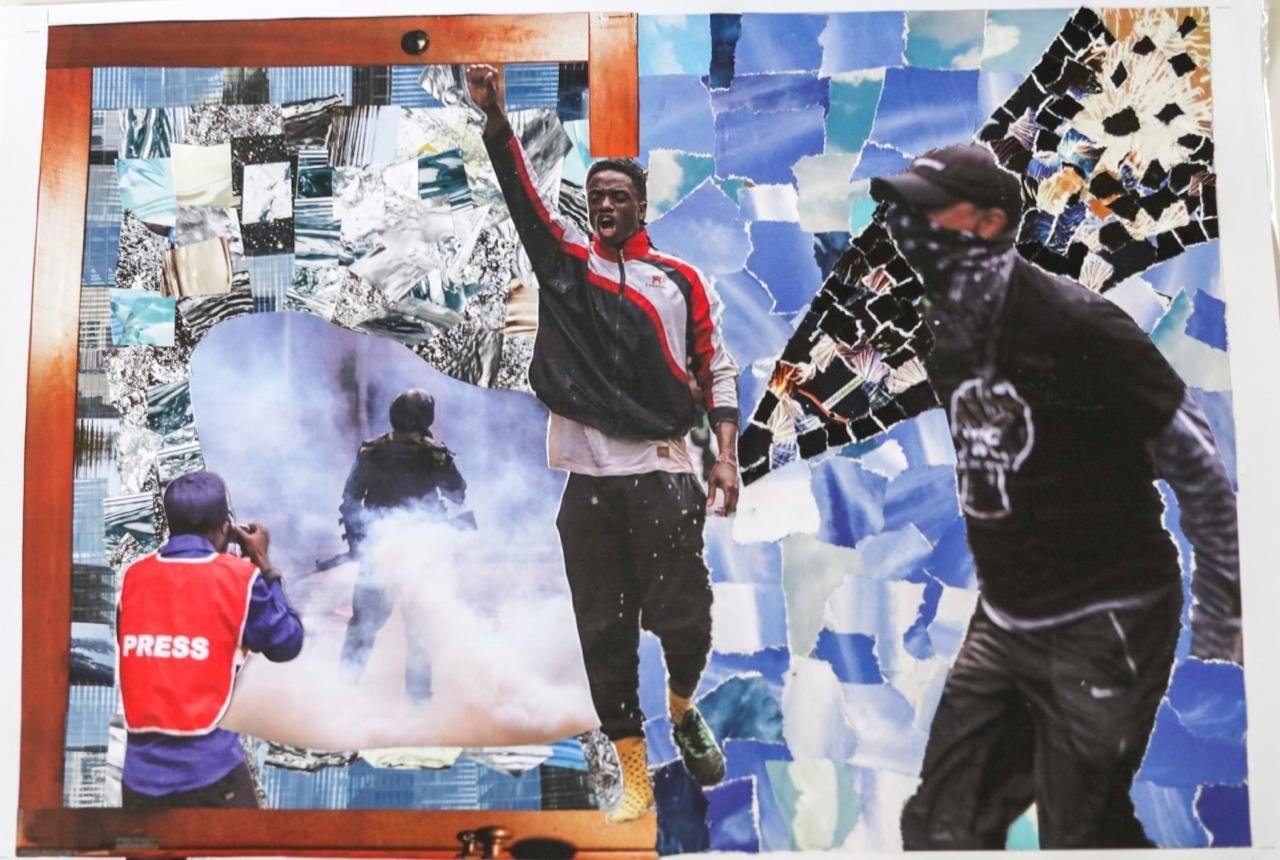
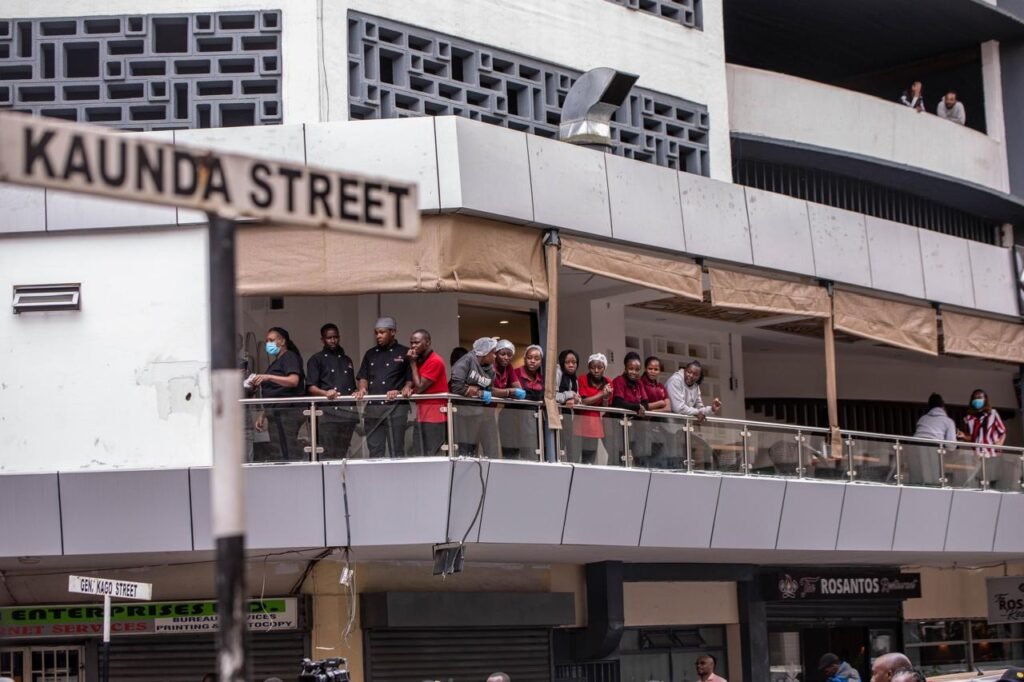
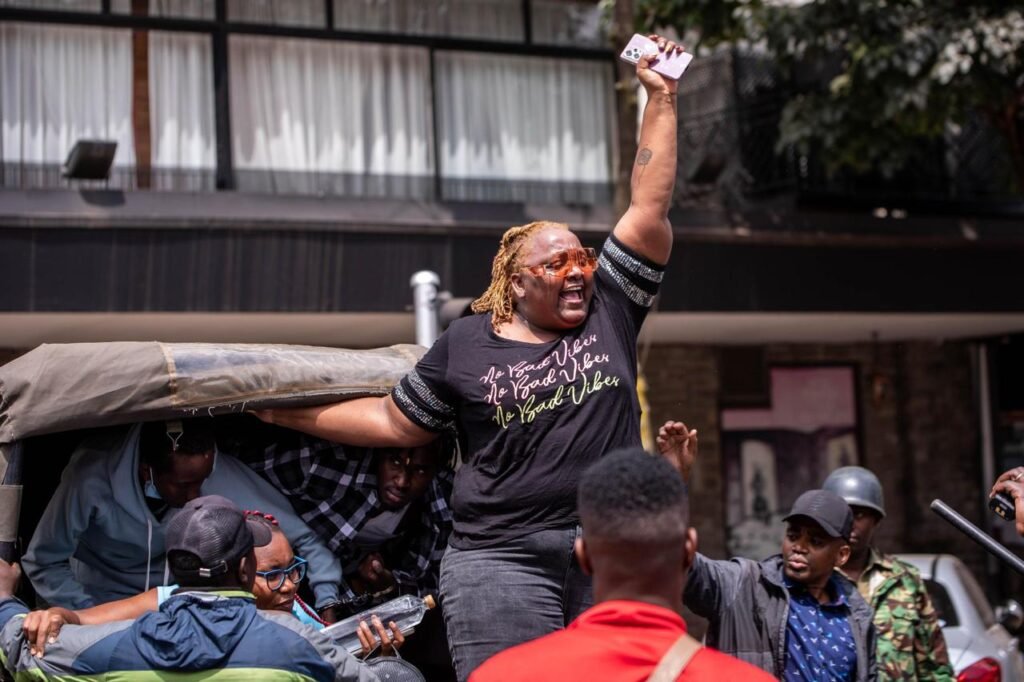
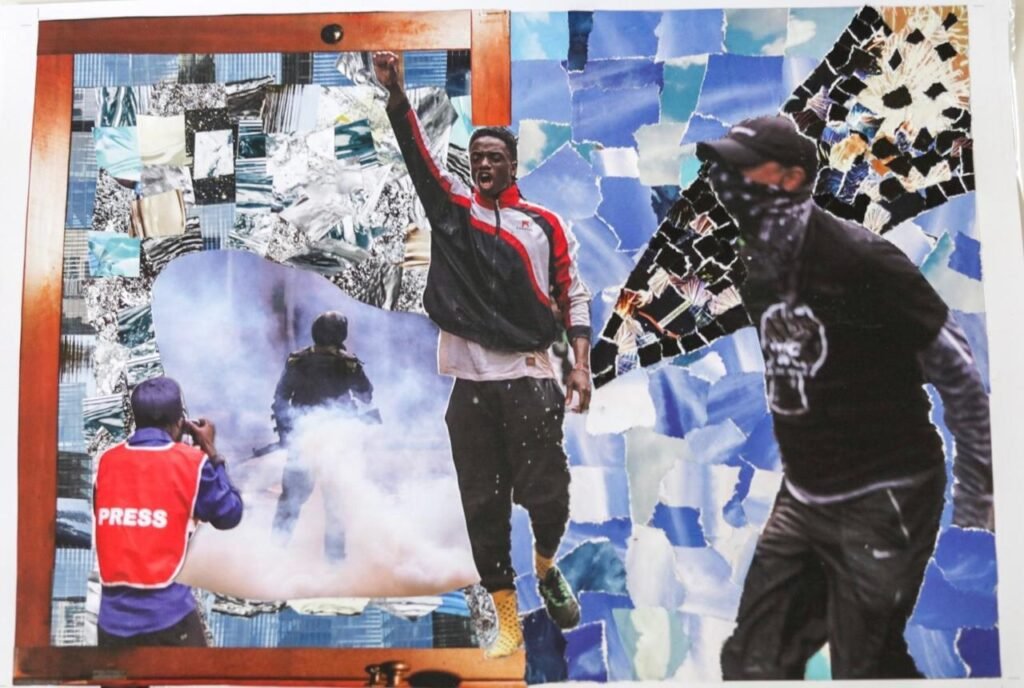
Jeremiah Onyango - photographer and social justice artist documented moments directly from the protests in Nairobi. All images in this project are used with his explicit permission. He is a collaborator, not a source.
His images are not neutral. They do not pretend to be objective records. They are witnessing. Onyango positions his camera where bodies are most vulnerable, most courageous, most exhausted.
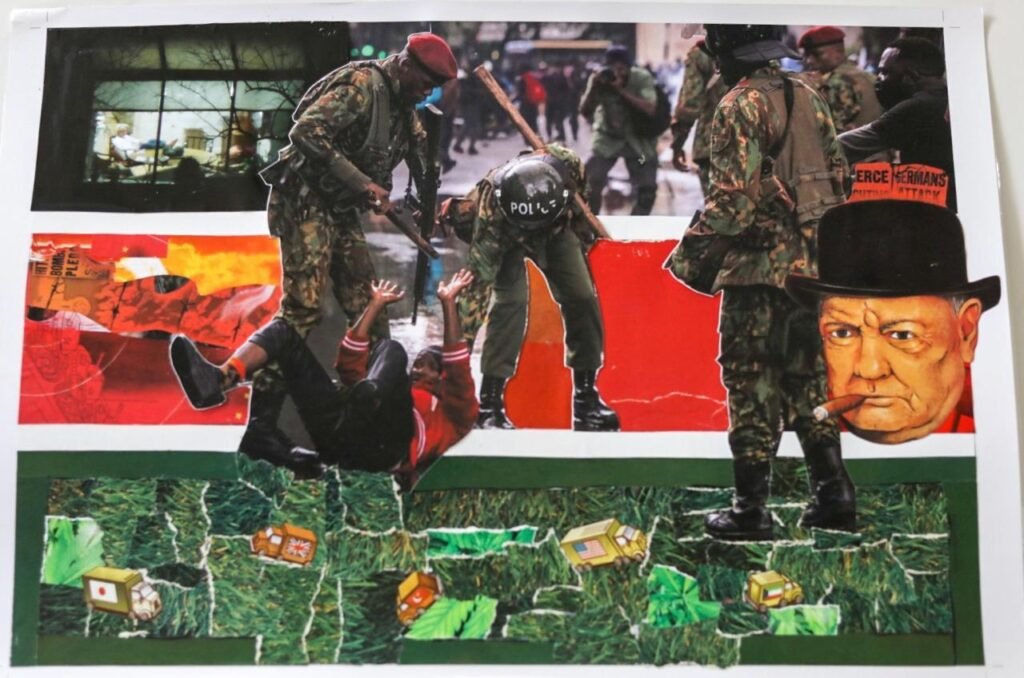
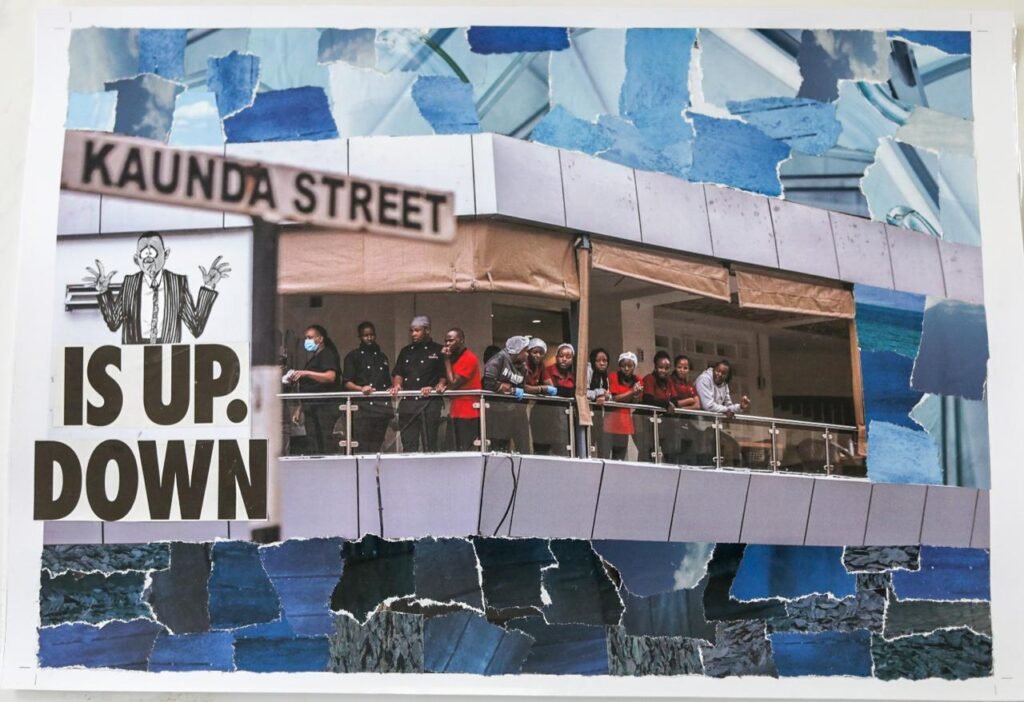
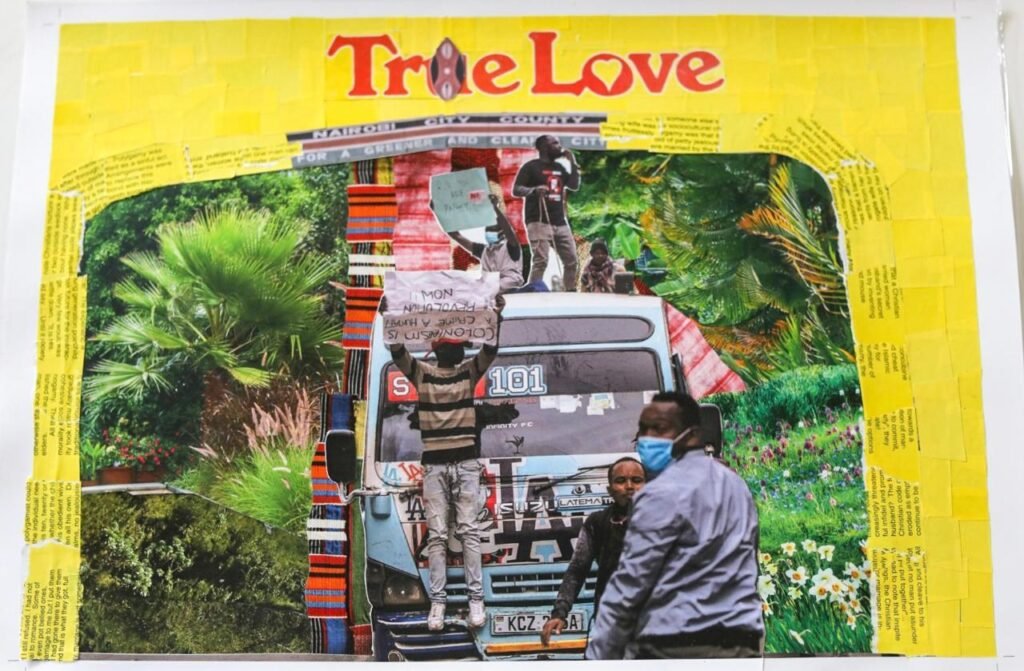
These images later became source material for collage reconstruction and speculative re-imagining within Game of Protests. I use source material carefully. Onyango's photographs were not simply illustrations. They were foundations of the documentary ground upon which imaginative work could be built.
Working with Onyango's images meant asking: What is the relationship between documentation and re-imagination? Does collage distort the truth of protest? Or does it reveal something that straight documentation cannot?
I came to believe the latter. Documentation shows what happened. Collage shows what it felt like and what freedom might still become.
4.4 The Fragments as Archive: Everyday Materials
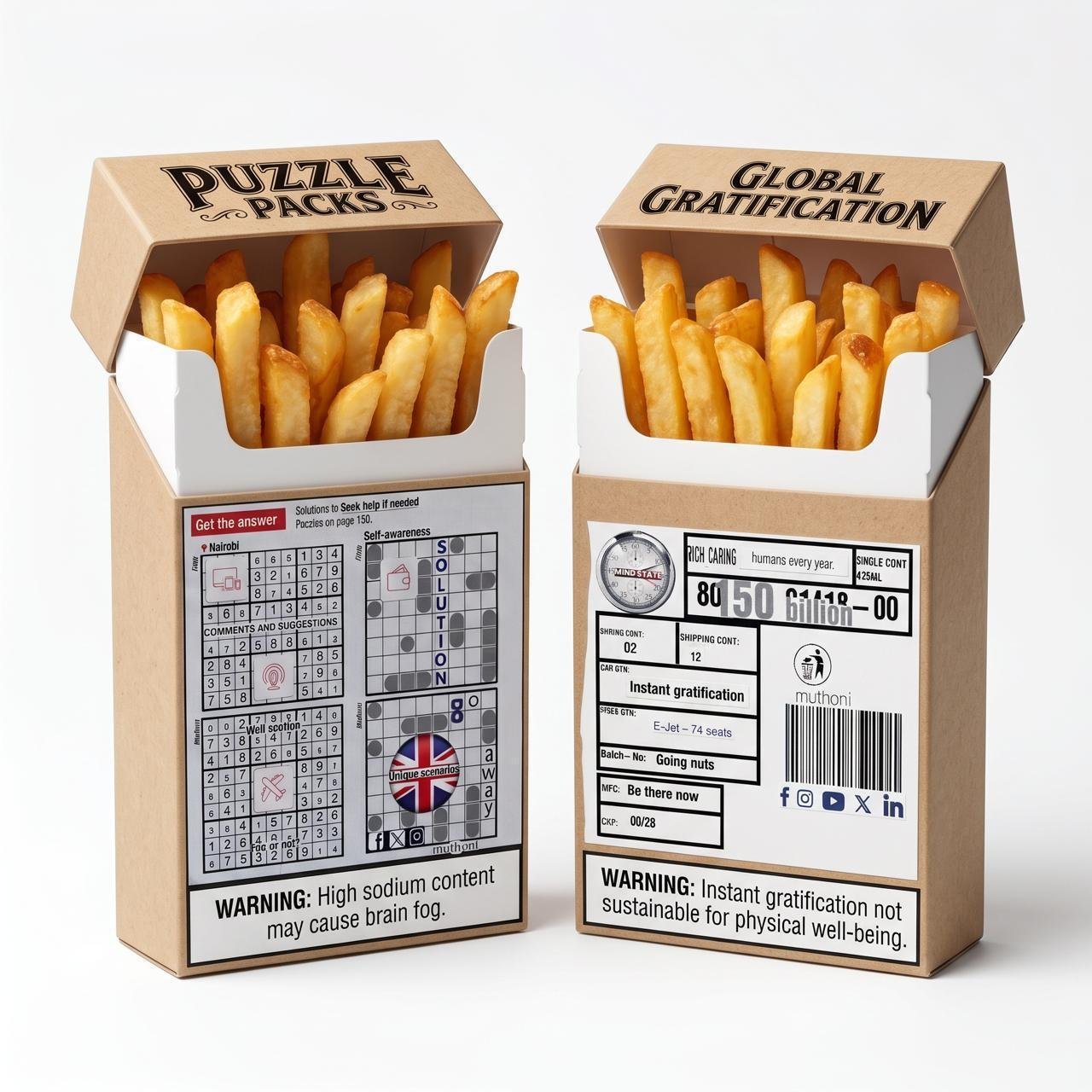
Through collage, protest imagery was transformed into alternative visions of freedom using fragmented everyday materials:
Cigarette packaging - addiction, slow death, corporate predation, but also small pleasures and daily rituals Warning labels - the state telling you what will kill you, while the state's own policies also kill you Supermarket receipts - what it costs to live. The paper trail of survival Magazine fragments - polished, aspirational imagery colliding with protest's rawness Sudoku grids - structure, patience, quiet problem-solving set against chaos Price tags - the valuation of everything, including bodies Found paper materials - whatever was on the street, in the house, in the recycling bin. No hierarchy of sources
Why these fragments? Why not clean, archival photographs or professionally designed graphics?
Because protest is not clean. Protest is not archival. Protest happens in the same world where people smoke cigarettes, clip price tags off new clothes, and puzzle over sudoku while waiting for the tear gas to clear.
Collage as archive does not pretend to completeness. It embraces the fragment as the most honest form of memory. We do not remember protests whole. We remember flashes, textures, images that cut through, objects we were holding when something happened.
4.5 Collective Memory and Borrowed Memory
The project became an inquiry into collective memory: how societies remember what happened to them, and how those memories shape future action.
The June 2024 protests exist in the first register right now. They are still alive in conversation, social media, and bodies that ran from tear gas. But they will not stay there forever.
Collage, digital archiving, and virtual gallery construction are attempts to move protest memory from communicative to cultural memory not to freeze it, but to give it a form that can travel across time and space.
Borrowed memory is my term for what happens when people who were not at the protests nevertheless carry the memory of them. Borrowed memory is not firsthand experience, but it is not false either. It is memory transmitted through images, stories, art, and archives. It is what makes solidarity possible across distance.
When you see Onyango's protest photographs even if you were not in Nairobi in June 2024 you begin to borrow that memory. When you cut and rearrange those photographs into a collage, you are not just documenting. You are making the memory your own not in a colonizing sense, but in a solidaristic sense: I was not there, but I will not forget.
4.6 Re-imagining Freedom Through Collage
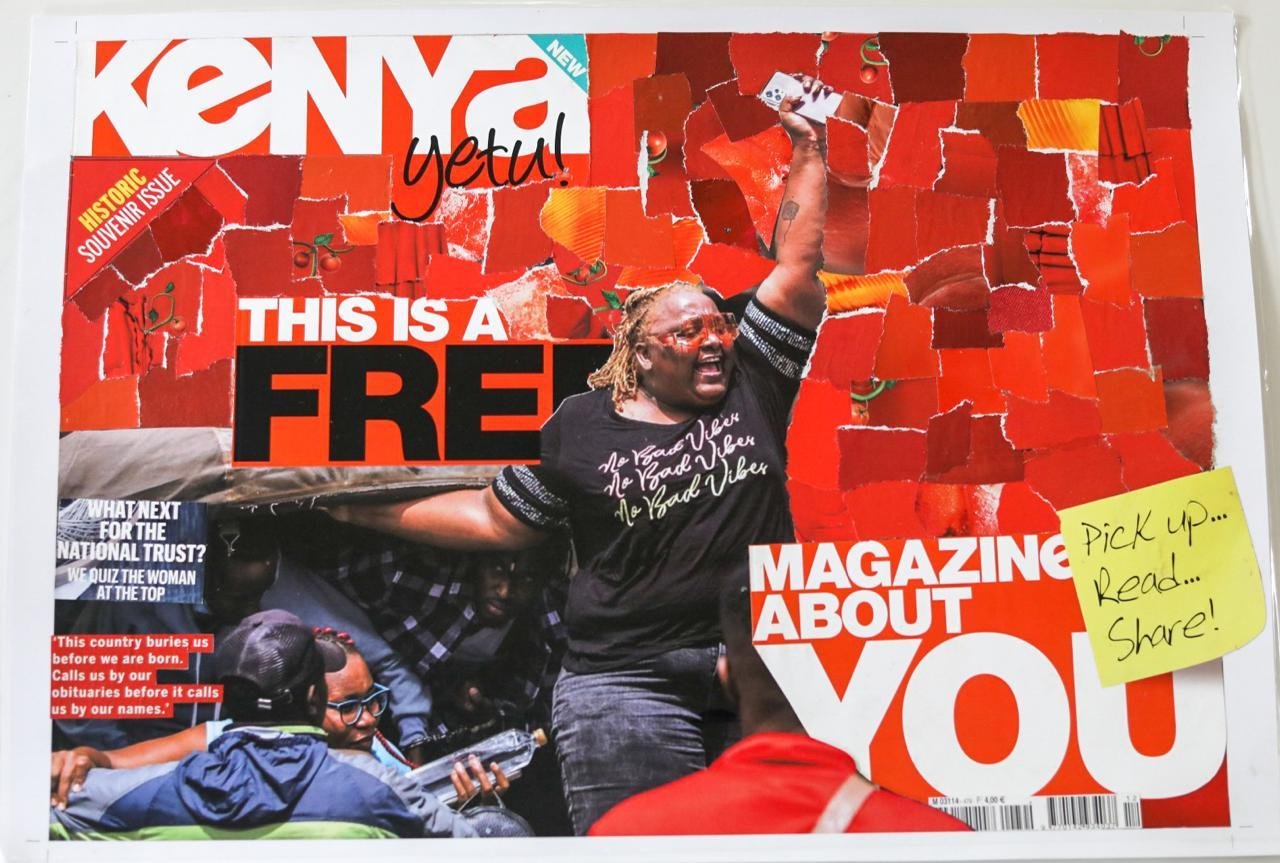
The process of cutting, rearranging, and reconstructing imagery became a method of re-imagining freedom itself.
Freedom, in the context of post-protest Kenya, is not a settled concept. Some people wanted lower taxes. Some wanted systemic overhaul. Some wanted the ruling class removed. Some wanted simply to be able to afford food and transport without constant anxiety. These different freedoms coexisted uneasily during the protests.
Collage allowed the project to hold multiple freedoms at once. A cigarette warning label about addiction sits next to a receipt for basic goods sits next to a protest photograph of a raised fist. The meaning is not singular. The collage does not resolve contradictions. It preserves them as productive tension.
This is politically important. Too often, art about protest flattens complexity into a single message: Resist! or Never forget! or Solidarity! These messages are not wrong, but they are incomplete. The June 2024 protests contained fear and courage, clarity and confusion, hope and despair. Collage can hold both.
4.7 Virtual Gallery Construction: Jabez and Spatial Memory
Game of Protests was not only a collage series. It was also a virtual gallery - hosted on Spatial.io - where visitors can walk through the work rather than scroll.
Jabez built the gallery. His labour was both technical and conceptual:
· Technical - building the infrastructure, making sure the gallery works across devices and locations · Conceptual - spatial layout decisions (which collages go where, how close or far, what you see first, lighting, navigation)
Jabez's work was infrastructure - invisible labour that makes memory accessible. Without him, the collages would sit on a hard drive. With him, they became a space you can enter from Nairobi, Glasgow, or Kajiado, at any hour.
The spatial arrangement matters. Which collages are near the entrance? Which require walking deeper into the gallery? Which are placed high or low? These are not neutral design choices. They are spatial arguments about how memory should be encountered.
4.8 Visual Direction: Tracy and Zavai
Tracy co-led visual direction alongside Zavai. Together, they oversaw:
Consistency across collage, photography, and spatial design How the project looked as a unified body of work The transition from physical collages to digital presentation Ensuring that the visual language remained coherent across all five team members' contributions
Where Zavai brought intuitive, nomadic aesthetics, Tracy brought structure and polish. Together, they made sure the work felt like one voice not five separate experiments.
Their collaboration also modelled something important about the project itself: visual direction was not a hierarchy. It was a shared practice. Tracy and Zavai guided, but the whole team contributed.
4.9 The Budget as Narrative (Full Team Acknowledgment)
At this point, I need to name something explicitly.
The money from the University of Glasgow was allocated to me alone. I chose to share it.
Not equally. According to labour, time, and process costs. Each of us received a small share.
That choice is the argument.
You cannot investigate classism while hoarding resources. You cannot ask honest questions about labour while paying yourself everything and others nothing. The small budget forced creativity, collaboration, and trust. It also told the truth: most artists work with very little. That is not a failure. That is the material.
Limited resources as method means: the constraint did not weaken the work. It became the work.
This document is not written despite the small budget. It is written because of it.
Chapter Four // Home, Safety & Nervous-System Citizenship ↓
CHAPTER FOUR: HOME, SAFETY AND NERVOUS-SYSTEM CITIZENSHIP
What you are looking at is a system that looks like it's working but the details don't add up. Fragmented. Glitched. Potential lies within. Live below your means. More fun? That's exactly how it feels to love Kenya right now. On paper, everything is fine. Booking confirmed. Seat assigned. Flight ready. But underneath? Exhaustion. Quiet grief.
From the artist's exploration series, third piece
5.1 The Question That Would Not Leave
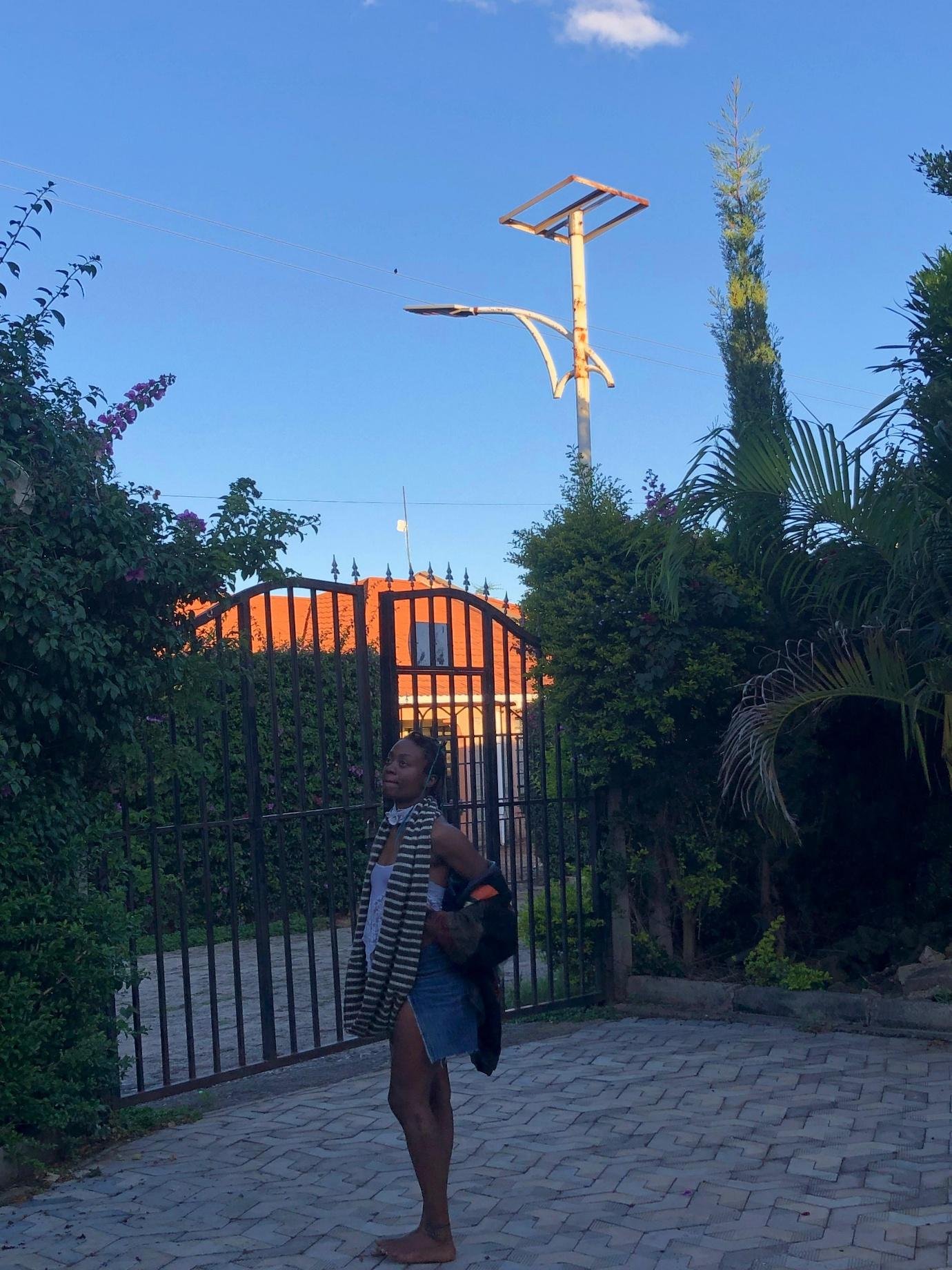
The question arrived quietly and refused to leave:
Where is home?
At the beginning of this project, I would have answered geographically: home is my mother's house. Home is the neighbourhood I grew up in. Home is Kenya, despite everything.
But the longer I stayed in Kajiado, observing Zavai's relationship to movement, the less satisfactory that answer became. Zavai does not have a single geographic home. She moves constantly between cities, between houses, between countries. And yet she does not seem homeless. She seems, in fact, more grounded than many people I know who have lived in the same house for decades.
What did she have that I did not?
The answer, which took months to arrive, was not a place. It was a condition of the nervous system.
5.2 Home as Internal Safety
One of the most significant realizations emerging from this research is that home is not necessarily a fixed geographic location.
Instead, home revealed itself as internal safety.
This is not a metaphor. I mean it physiologically. Home is what your nervous system feels when it is regulated enough to rest, to connect, to create, and to move without hypervigilance. Home is the absence of the question Am I safe here? Not because danger does not exist, but because your body has stopped scanning for it constantly.
Before Kajiado, I did not know that my nervous system was dysregulated. I thought my constant low-grade anxiety was just personality or realism or being an adult in a difficult country. I did not have language for what I was feeling because I had never experienced the alternative.
The alternative was Kajiado. Slowness. Predictability. Shared meals. Permission to rest. A body that, over weeks, stopped bracing.
When that happened, when my shoulders dropped, my breathing slowed, and I stopped waiting for the next bad thing, I realized: Oh. This is what home is supposed to feel like.
The building was irrelevant. The country was still Kenya, with all its structural failures. Nothing external had changed. Only my internal state had shifted. But that shift changed everything.
5.3 Defining Nervous-System Citizenship
I introduce the term nervous-system citizenship to name this phenomenon.
Nervous-system citizenship is the understanding that belonging is not primarily geographic (which passport you hold), spatial (which infrastructure serves you), or legal (which rights you are granted). Belonging is somatic, it lives in the body's capacity to regulate, to rest, to connect, and to move through the world without chronic hypervigilance.
Citizenship, in the conventional sense, is granted by the state. Nervous-system citizenship is cultivated through relationship, environment, routine, and practice. The state cannot give it to you. The state can only create conditions that make it harder or easier to achieve.
In the Kenyan context, this lens reveals both despair and hope. The June 2024 protests demonstrated how quickly the state can destroy nervous-system safety. But the solidarity, mutual aid, and collective care that emerged during the protests also demonstrated how communities can cultivate safety together even under threat.
5.4 What the Residency Environment Enabled
The self-sponsored residency in Kajiado was not designed as a therapeutic intervention. But it became one, unintentionally, because of what it contained:
Collaborative living - shared decision-making, reduced isolation, distributed emotional load Shared meals - regular, predictable nourishment. Eating together as attachment ritual Emotional openness - permission to say I am not okay without fixing or pathologizing Routine - predictability as nervous-system safety Movement - walking, traveling, shifting environments, but not fleeing. Movement without urgency Slowness - the opposite of productivity culture. Time not measured in outputs Neighbouring - low-stakes social contact. Greetings, small talk, mutual acknowledgment Rest - not as reward for work, but as baseline condition Creative collaboration - making together, not as competition but as conversation
None of these elements is expensive or rare. They are available, in principle, to anyone. But they are systematically devalued by capitalist, productivity-oriented, individualistic cultures. You cannot bill for shared meals. You cannot put rest on a CV. You cannot publish neighbouring.
And yet, these ordinary practices were the infrastructure of safety. Without them, the research would have been just another anxious person taking notes.
5.5 The Shift from Urgency to Slowness
At the beginning of the project, I approached the work from urgency and fear.
I was afraid of failing the commission. Afraid of not producing enough. Afraid that observing without immediate output was wasting time. Afraid that I did not deserve to be there.
This fear was not personal. It was structural. Research culture rewards speed. Commission culture rewards deliverables. Capitalism rewards visible productivity. Urgency is not a bug; it is a feature of the systems we work within.
But urgency is also incompatible with observation. You cannot observe carefully when you are rushing. You cannot witness softly when you are already thinking about the next task. You cannot feel safety when your body is braced for the next demand.
The shift happened slowly, almost without my noticing.
One day, I realized I had stopped checking my phone first thing in the morning.
Another day, I realized I had spent an hour watching Zavai do sudoku without once thinking about what I would do with that observation.
Another day, I realized I had forgotten to feel anxious.
The slower I moved, the more observant I became.
The safer I felt, the more clearly, I could see.
This is not a personal productivity tip. It is a methodological and political claim: slowness is a condition of accurate observation. If your research is rushed, your observations will be shallow. If your nervous system is dysregulated, your perceptions will be distorted. If you cannot rest, you cannot witness.
5.6 The Relationship Between Observation and Internal Safety
This chapter has argued that observation and internal safety are not separate concerns. They are deeply linked.
Here is why:
1. A dysregulated nervous system perceives threat where none exists - If I am anxious, I will see danger in neutral situations, hostility in neutral faces, urgency in calm moments. My observations will be distorted. 2. A regulated nervous system can afford to be curious - Safety enables exploration. When the body is not bracing for threat, attention can open outward. Curiosity, not vigilance, is the foundation of good observation. 3. Observation itself can be regulating - The act of paying close, patient, non-judgmental attention to something external can settle the nervous system. Watching Zavai do sudoku was regulating for me. 4. Safety enables ethical observation - When I am desperate for data, I am more likely to extract, to push boundaries, to observe without consent. When I am safe, I can afford to be patient, transparent, and willing to stop.
The project suggests a counterintuitive principle: Before you observe, regulate. Your nervous system is not a distraction from your research. It is your primary instrument. Keep it tuned.
Chapter Five // Technology, Reconstruction, and Spatial Memory ↓
CHAPTER FIVE: TECHNOLOGY, RECONSTRUCTION, AND SPATIAL MEMORY
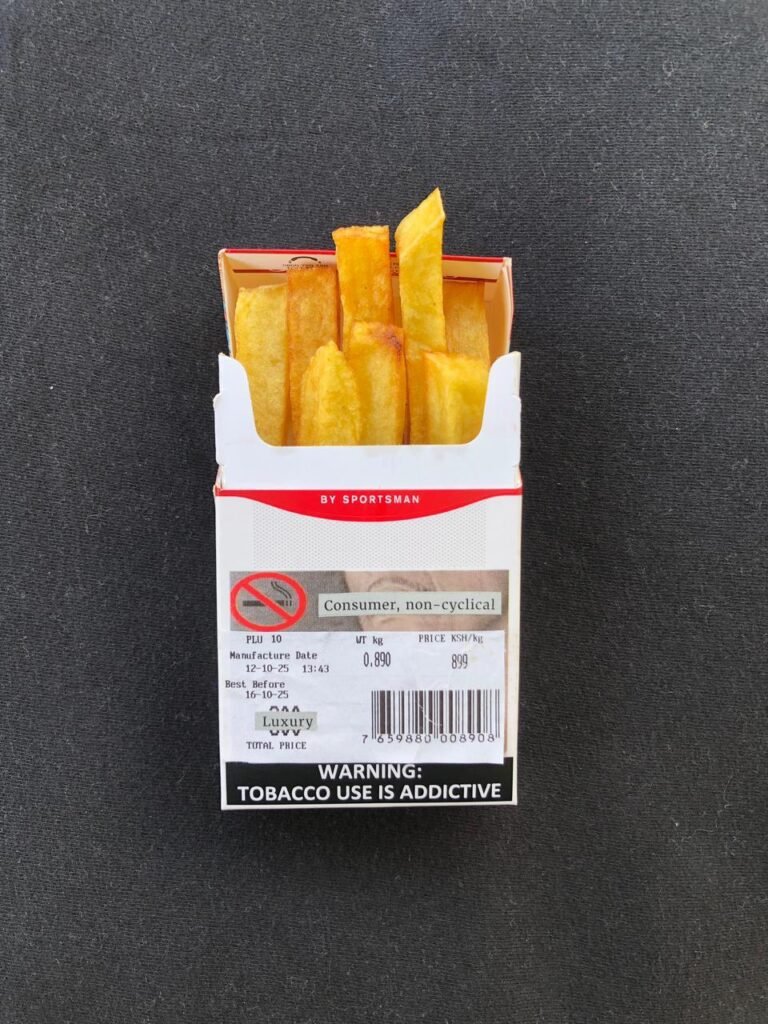
Now, in this current research phase, I am revisiting it. Recreating it with Leonardo AI. Comparing the two. Because the question is no longer just what home means. It is also what happens when the tools we use to explore that question change.
From the artist's exploration series, sixth piece
6.1 The Question That Arrived with Technology
As the project evolved, questions surrounding technology and memory became increasingly urgent.
Not because technology was new to me. I have used digital tools for years but because the residency changed my relationship to them. In Kajiado, I did not have a studio. I did not have shelves of collected materials. I did not have quick access to the cigarette boxes, receipts, and magazine fragments that had formed the backbone of my earlier physical collages.
What I had was observation, a notebook, and eventually, AI-assisted image generation tools.
This raised a practical question: Could I continue making work without my physical archive?
And then a deeper question: What happens to observation when the tools of reconstruction change?
6.2 The Cigarette Box Piece: A Case Study
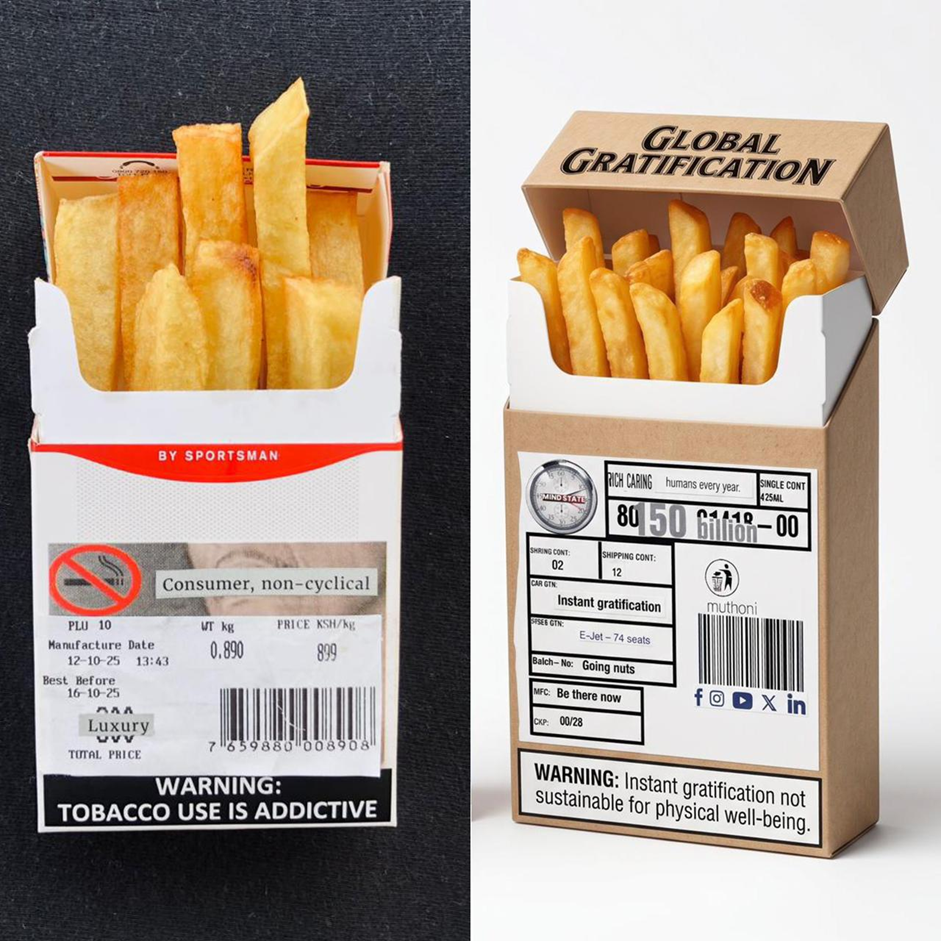
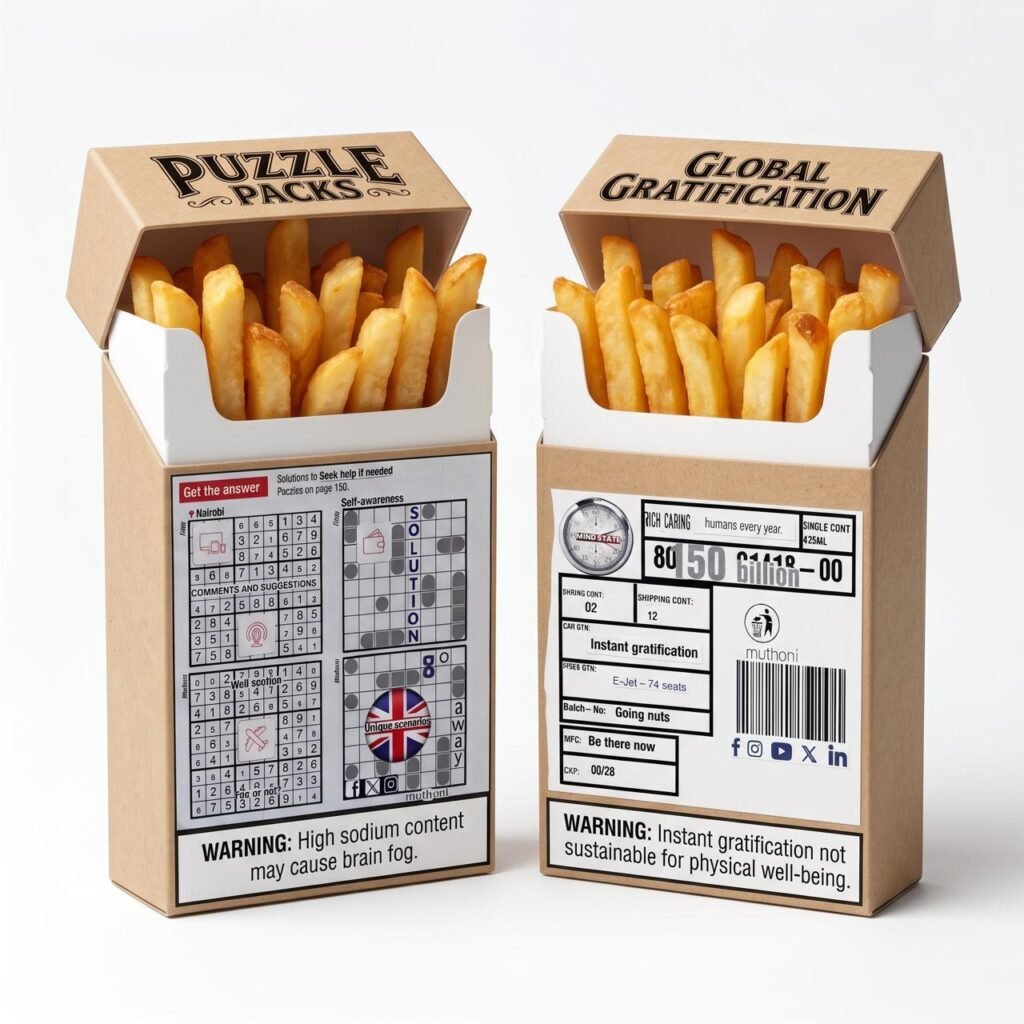
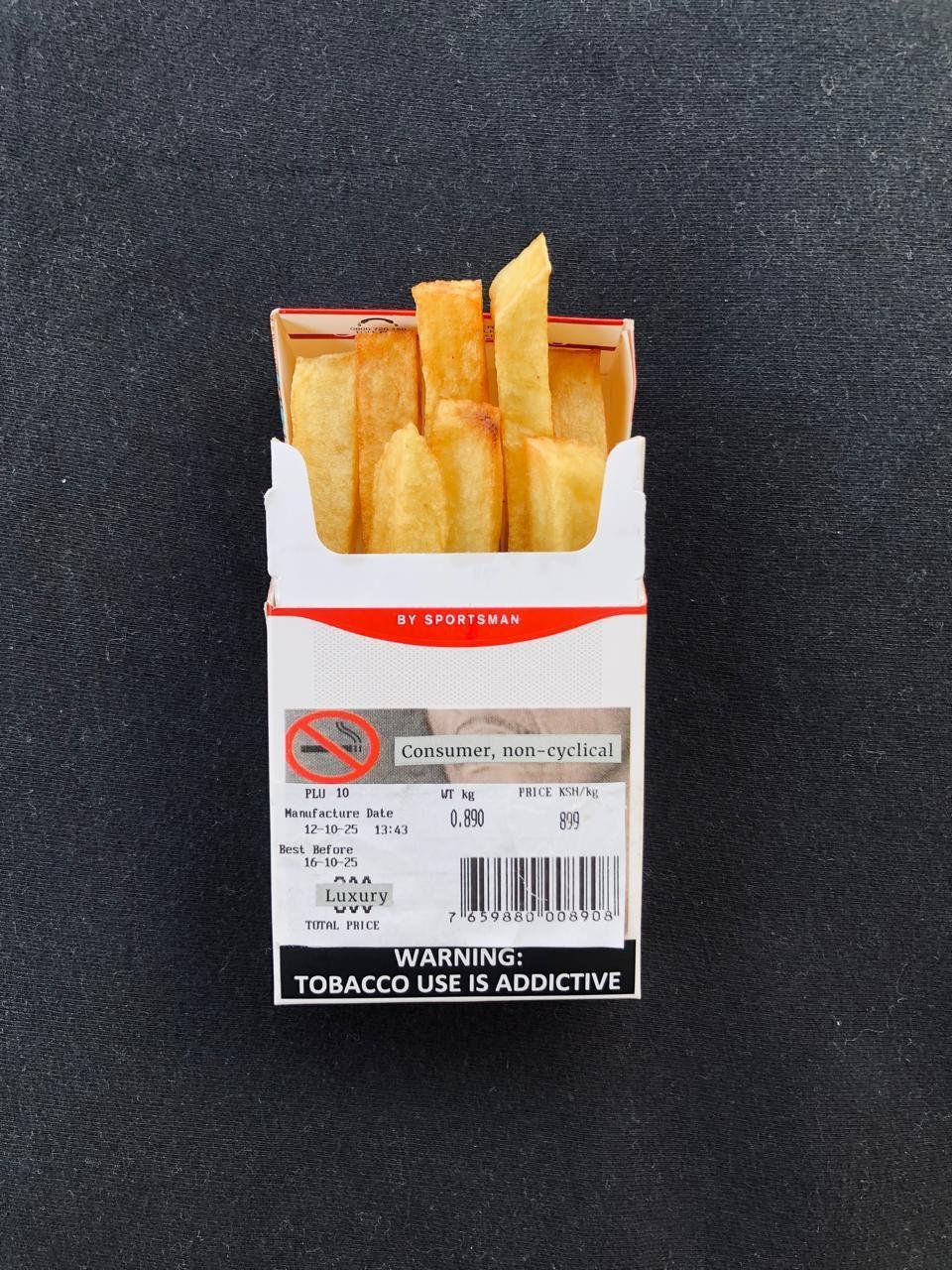
To explore these questions, I returned to an earlier physical artwork: a collage built from a cigarette box, a price tag, and a warning label.
The original piece contained specific fragments:
"Tobacco use is addictive" - a health warning mandated by the state "Manufacture date 12 10 25" - a future date at the time of making "Best before 16 10 25" - four days after manufacture. The absurdity of a product that expires almost immediately "Price per kilo 899" - a valuation. What this commodity costs "Luxury" - a word juxtaposing addiction with aspiration
These fragments were cut out, rearranged, and collaged onto a surface made from whatever was lying around. The piece was not precious. It was made quickly, intuitively, with hands and scissors and glue.
When I recreated this piece using Leonardo AI, I did not attempt to produce an identical copy. That would have been impossible, and also beside the point. Instead, I fed the AI prompts based on the original fragments and watched what emerged.
The AI-generated version preserved the warning. It preserved the tension between addiction, value, and time. But it lost something too: the physicality of cutting, the accident of glue, the specific texture of that particular cigarette box that I had held in my hands.
Same warning. Different tools.
This became the guiding principle for the entire technological phase of the research.
6.3 What AI Enables
AI-assisted reconstruction offered several affordances that physical collage could not:
Portability - I could continue making work without carrying a studio Iteration - Physical collage punishes iteration. Once you glue something down, it is down. AI allows endless variations Access - Not everyone has access to collected materials, studio space, or physical archives. AI lowers the barrier Speed - a double-edged sword, but speed enabled me to test ideas quickly, to fail faster, to arrive at questions I would not have reached through slow physical making alone
These affordances mattered during a residency characterized by movement and uncertainty. I could not carry a suitcase full of cigarette boxes from Nairobi to Kajiado and back. But I could carry my phone and a laptop. That laptop, equipped with AI tools, became a portable studio.
Zavai, as a technologist and nomad modelled this for me. She did not wait until she was in a perfect studio to make work. She made work wherever she was, with whatever tools were available. Technology was not a compromise. It was an extension of her practice.
6.4 What AI Erases
But affordances are not the whole story. AI also erases.
Materiality - The specific texture of a specific cigarette box. The way glue changes paper. The weight of a found object Accident - Physical collage produces happy accidents: a tear in the wrong place, a glue smudge, a cut that goes too far. These accidents are often the most alive parts of the work. AI generates from intention, not accident Labour - The time spent cutting, arranging, gluing, waiting. This labour is not just means to an end. It is thinking in the hands. AI collapses that thinking into a prompt Authorship - Who made the AI-generated image? Me, who wrote the prompt? The developers of the model? The training images the model was built on? Authorship becomes distributed and ethically murky
These losses are not trivial. They are reasons many artists reject AI outright. I do not reject AI, but I also do not pretend the losses are not real.
For Game of Protests, the trade was worth it because the project needed portability, iteration, and access more than it needed materiality and accident. But another project might make a different calculation.
6.5 Technology as Extension, Not Replacement
This research approached technology as collaborative tool rather than creative substitute.
Technology as Replacement Technology as Extension AI does the thinking for you AI follows your direction You outsource creativity You use AI to explore variations on your own ideas The tool replaces your hands The tool extends what your hands can reach One image is final Many images are iterations toward a question Speed is the goal Speed enables experimentation
Zavai's influence was crucial here. As someone who works at the intersection of technology and creative direction, she does not see AI as a threat to artistic practice. She sees it as another material like paint, like clay, like scissors and glue.
Same warning. Different tools. The warning is not only about tobacco addiction. It is also about technological convenience: This tool will change you. Use it anyway? Or don't. But know what you are choosing.
6.6 Spatial Memory and the Virtual Gallery (Jabez + Tracy)
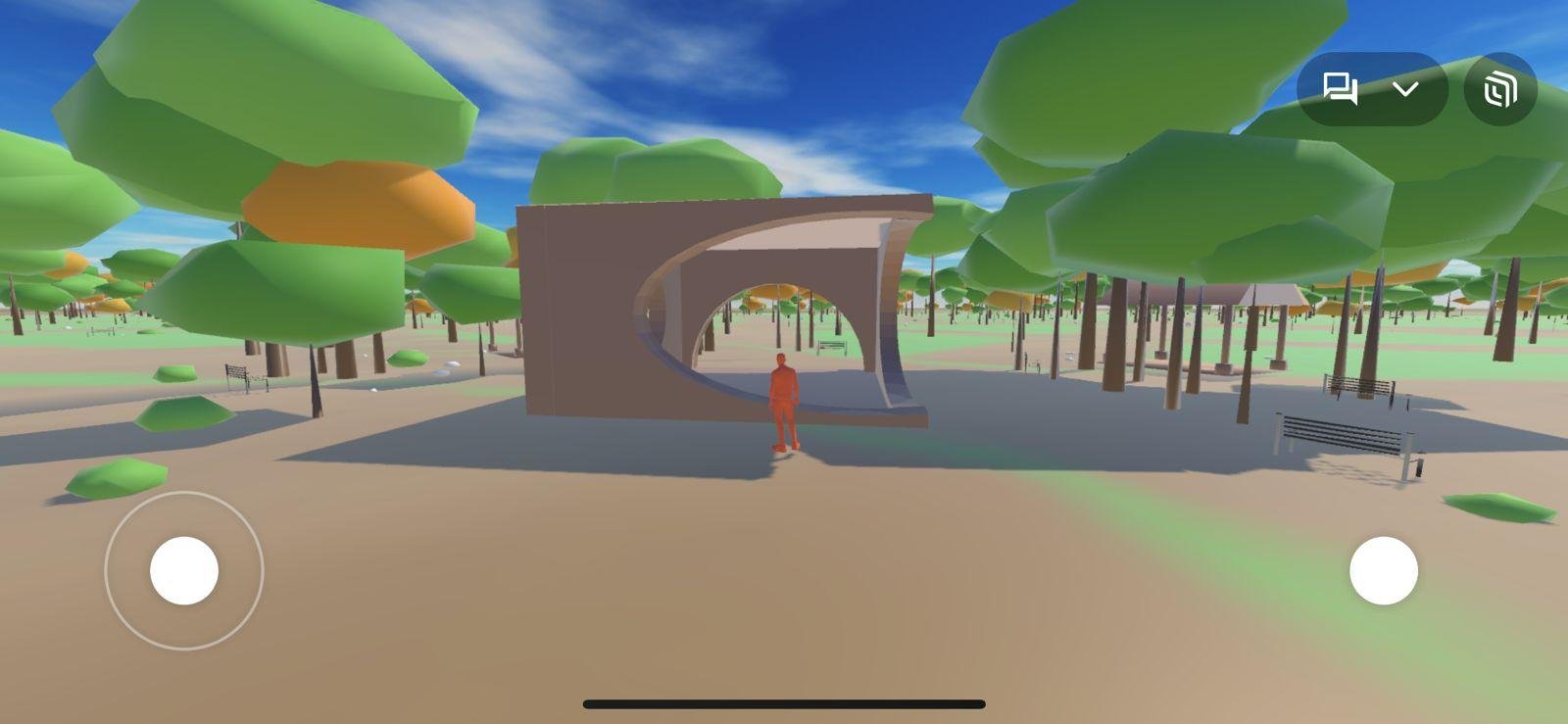
The virtual gallery for Game of Protests was built by Jabez on Spatial.io. Tracy and Zavai guided the visual consistency across physical and digital spaces.
Visitors encounter both physical-origin collages (photographed and uploaded) and AI-generated pieces. The two are not labelled differently. They hang side by side in the same digital walls.
This was a deliberate design choice. We did not want to create a hierarchy that said physical is authentic, digital is fake. Both are authentic to different phases of the research. Both carry different kinds of memory.
Spatial memory is the term I use for how virtual architecture shapes the experience of art. In a physical gallery, your body moves through space. You turn corners. You approach and retreat. You see works in relation to each other and to the room. A virtual gallery can simulate this but it is not the same. The simulation has its own logic: no fatigue, no temperature, no other bodies in your way. Whether this is better or worse depends on what you value.
What the virtual gallery enabled was access across distance. A viewer in Nairobi, a viewer in Glasgow, and a viewer in Kajiado can all walk through the same space. They can return to it after the physical exhibition closes. The memory of the protests, translated into collage and rendered spatially, becomes something that can be revisited, studied, and borrowed.
Jabez's layout decisions which collages near the entrance, which require walking deeper, which are placed high or low are spatial arguments about how memory should be encountered. That is not technical labour. That is conceptual labour. And it is why he is named throughout this document.
6.7 Observation in the Age of AI
What does observation as medium mean when AI can generate images of things that never happened?
This is not a hypothetical question. During the June 2024 protests, AI-generated images circulated alongside documentation. Some were obvious fakes. Others were harder to distinguish. The information environment became a hall of mirrors.
Observation, in this context, must become more careful, not less. The observer cannot assume that what they are seeing is real. They must trace provenance, ask who made an image and why, remain aware that their own perception can be manipulated.
But observation must also become more imaginative. AI-generated protest imagery is not only deceptive. It can also be speculative: What would freedom look like? What if the protest had succeeded differently? What if the future we are fighting for were visible right now?
Game of Protests used AI not to fabricate documentation but to extend the emotional and speculative range of collage. The cigarette box piece was real. The AI recreation of it is also real as an artwork, as an exploration, as a question about what technology does to memory.
The medium is not the material. The medium is the relationship between observer, observed, and the act of paying attention. That relationship can exist with scissors and glue. It can also exist with prompts and algorithms. What matters is the quality of attention, the ethics of witnessing, and the willingness to stay inside the discomfort of not knowing.
Conclusion // Be Where Your Feet Are ↓
CONCLUSION: BE WHERE YOUR FEET ARE
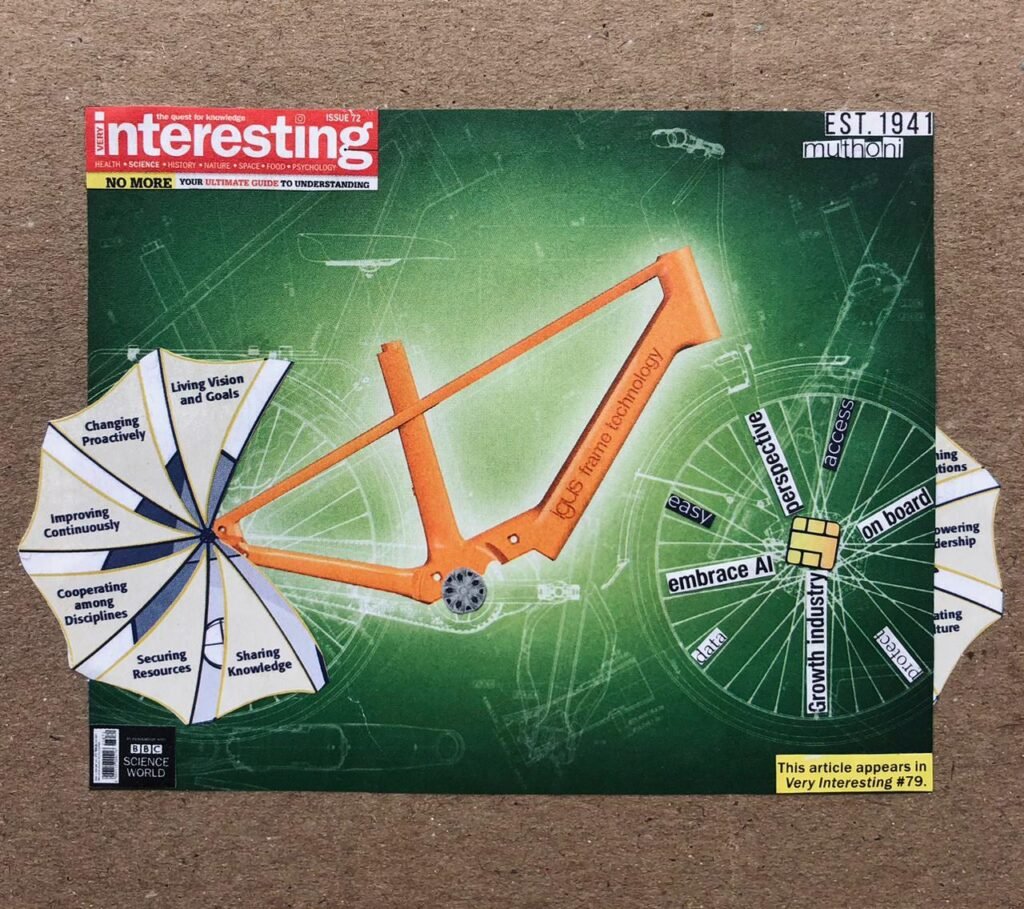
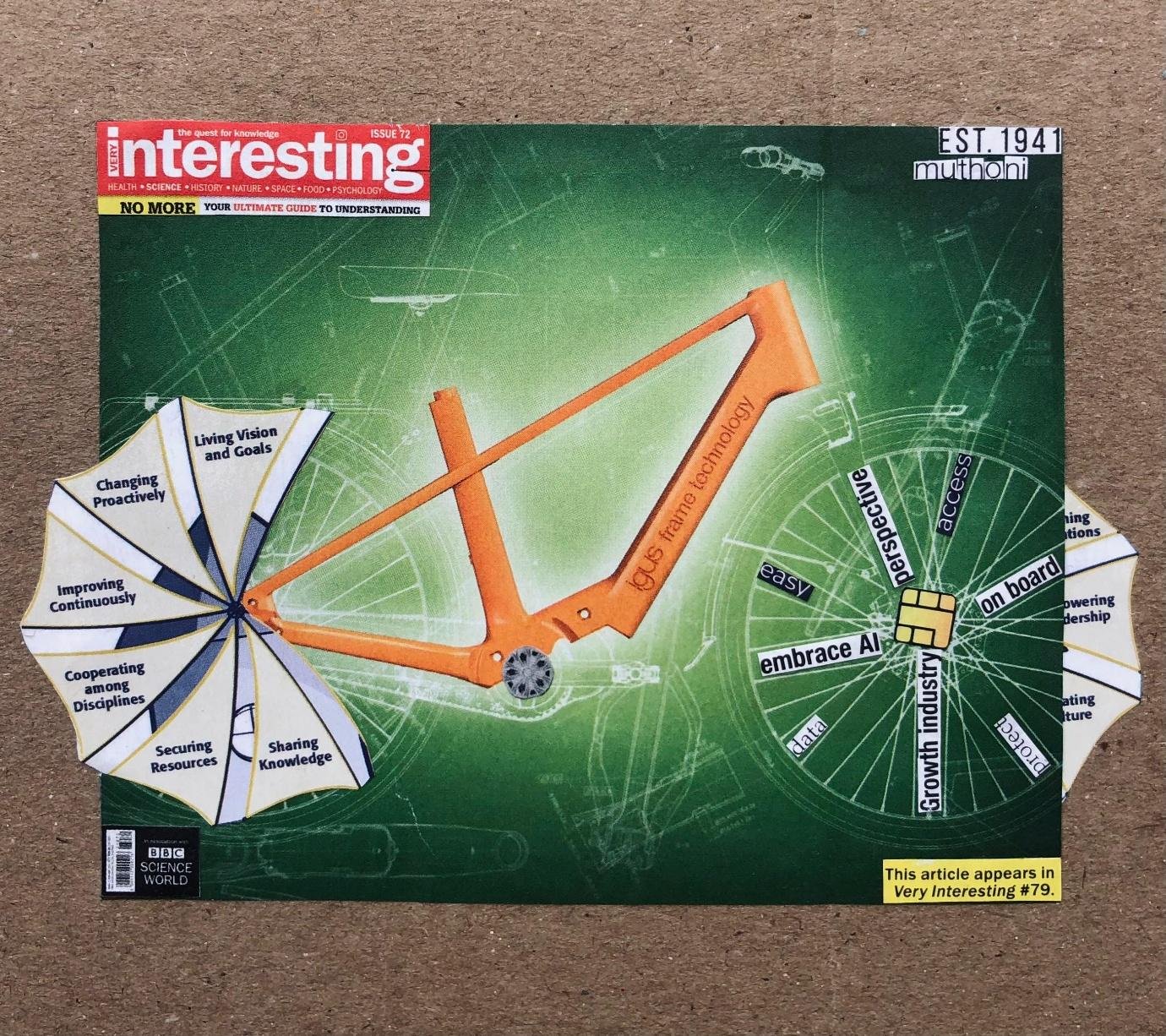
What you are looking at is the fifth and final exploration art piece. If you look closely. This collage is built from a magazine page subtitled 'Your Ultimate Guide to Understanding.' It lists polished self-help commandments: Living Vision and Goals, Changing Proactively, Sharing Knowledge, Embracing AI... then I added some cut outs into it. I added my name, Muthoni. The year 1941. The magazine title 'INTERESTING.' What I am actually trying to say is the official guides to understanding and exploring reality rarely include the messy stuff. They do not ask where you come from. They do not ask whose name you carry or what year keeps following you. They assume everyone starts from the same blank page. But home is not a blank page.
From the artist's exploration series, fifth piece
7.1 Returning to Observation as Medium
This document began with a claim: observation as medium - not merely a visual act, but a relational, political, and nervous-system-based practice.
After five chapters, what does that claim mean now?
It means that observation is not something you do. It is something you inhabit. You cannot observe well from outside a situation. You have to be inside it not as a detached fly on the wall, but as a present, accountable, embodied witness. You have to let the situation change you. You have to let your nervous system settle enough to see clearly. You have to stay long enough for the ordinary to reveal itself as extraordinary.
Observation as medium is slow. It is relational. It is uncomfortable at times because witnessing is uncomfortable, and because being witnessed in return is uncomfortable. It does not produce quick results. It does not fit neatly into research timelines or commission deliverables. It asks you to be where your feet are even when your feet are somewhere unfamiliar, even when you got lost on the way there, even when someone had to tell you to turn.
7.2 Summary of Contributions
Methodological Contributions
Contribution What It Means Self-sponsored residency - Observation outside institutional structures. Slower, more uncertain, more dependent on trust. Soft witnessing - Observation that accompanies rather than extracts. Ethical, transparent, willing to stop. Nervous-system attunement as data - The observer's physiological state is not a distraction but an instrument. Ordinary practices as methods - Walking, cooking, resting, collecting, playing sudoku. These are not background noise. They are research.
Conceptual Contributions
Contribution What It Means Nervous-system citizenship - Belonging as internal safety, not geographic or legal status. Home as embodied condition. Borrowed memory- Memory transmitted across distance and community. Not firsthand, not false. What makes solidarity possible. Collage as archive - The fragment as the most honest form of memory. No pretense of completeness. Limited resources as method - One person's budget shared with four collaborators. The constraint became the argument.
Artistic Contributions
Contribution What It Means Game of Protests A virtual gallery exploring protest, memory, and urban hierarchies. Collage series Five exploration pieces (and AI recreations) tracing home, movement, and belonging. Jabez's spatial layout The virtual gallery as accessible, revisitable, cross-border archive. Tracy + Zavai's visual direction A unified visual language across physical and digital mediums. Jeremiah Onyango's documentation Protest images used with permission as foundation for re-imagination.
Political Contributions
Contribution What It Means Nervous-system citizenship as lens Evaluating systems by whether they make home possible or impossible. Slowness as resistance Urgency is structural. Slowness is a refusal of productivity culture. The ordinary as political Shared meals, rest, neighbouring, routine. These are the infrastructure of safety.
7.3 Limitations and Honest Admissions
No project is without limits. Naming them is not weakness. It is accountability.
Short duration -The residency lasted weeks. Longer observation would have revealed more. Single collaborator as primary subject - Zavai is one artist, one nomad, one perspective. This document does not claim to represent all Kenyan artists. Geographic specificity - Kajiado is not Nairobi. Findings may not transfer. Self-funding constraints - The residency lasted as long as my resources allowed. AI's costs - This document does not fully address the environmental, labour, and copyright harms of AI-assisted generation. Future work must. No formal ethics review - I built my own ethical framework (soft witnessing, transparency, permission to stop). This was better than nothing but worse than robust community accountability.
These are not confessions of failure. They are invitations to future work. Someone else should do this for longer, with more collaborators, in more locations, with deeper accountability structures.
7.4 Be Where Your Feet Are (Final)
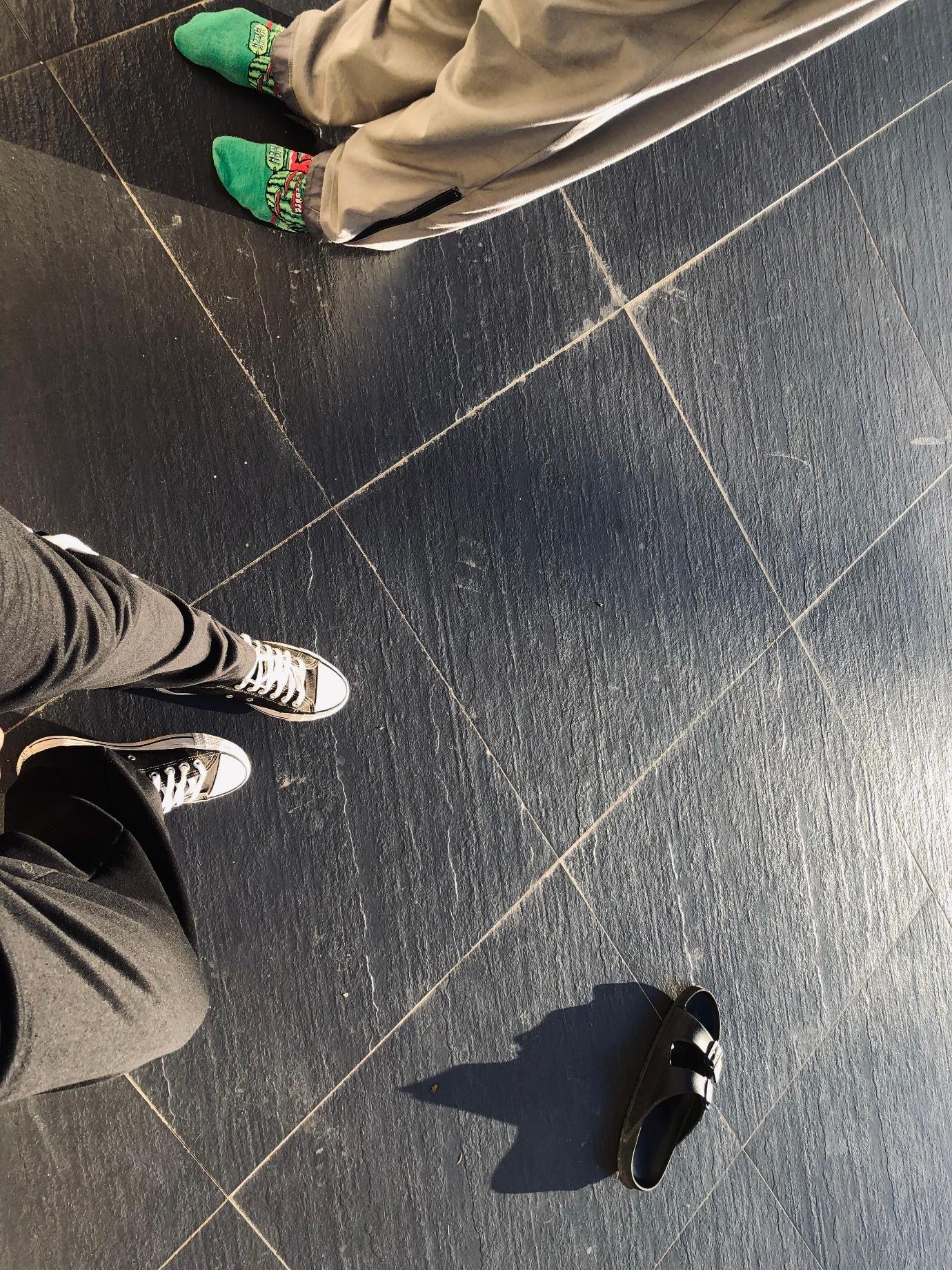
This sounds like a cliché. I know.
It appears on inspirational posters and Instagram captions. It can be used to dismiss legitimate longing for somewhere else, or to gaslight people into accepting unbearable presents.
But I mean it differently.
I mean it as a hard-won instruction that emerged from getting lost, being told to turn, arriving somewhere unfamiliar that felt safe, staying long enough to stop bracing, and realizing that home was not a building I had left behind but a condition I could cultivate wherever I stood.
I mean it as a methodological principle: you cannot observe where you are not present. Presence requires your feet, but also your attention, your regulated nervous system, your willingness to be uncomfortable, your commitment to staying.
I mean it as a political statement: the systems that want you docile and productive also want you elsewhere anxious about the future, nostalgic for the past, distracted by screens, scrolling through other people's lives. Being where your feet are is a refusal of that dispersal.
And I mean it as a gift to Zavai, Jabez, Tracy, Jeremiah, and anyone reading this who has ever felt uncertain about where they belong.
Be where your feet are. Not only where your feet are. You can also plan, remember, imagine, hope. But start with your feet. They are already here. They have been carrying you this whole time.
7.5 What the Project Understood Before I Did
I wrote at the beginning of this document:
I think the project understood me before I understood it.
That remains true.
When I first received the acceptance email, I thought Forging Urban Citizenship was about infrastructure, class systems, movement within cities, and the visible politics of space. I thought citizenship was spatial. I thought observation was looking. I thought home was a building. I thought research required institutions. I thought AI was either salvation or doom. I thought urgency was productivity. I thought rest was a reward. I thought I had to earn the right to be where I was.
The project undid all of these assumptions. Not through argument but through lived experience. Through getting lost. Through being told to turn. Through arriving somewhere unfamiliar that felt safe. Through watching Zavai do sudoku. Through cutting up cigarette boxes and warning labels and receipts. Through walking, cooking, resting, collecting, conversing, staying silent. Through the June 2024 protests and the grief that followed. Through AI recreations that could not replace physical collages but could extend them. Through writing this document and realizing, somewhere in the middle of Chapter Four, that I had stopped bracing.
The project understood me before I understood it.
Now, at the end, I understand more. Not everything. Not most things. Not even close. But enough to say:
Observation is a medium.
Home is internal safety.
Citizenship lives in the nervous system.
Memory can be borrowed.
Limited resources are not a weakness; they are the material.
Technology can extend or replace, choose carefully.
And the only place to start is where your feet already are.
Glossary of Terms
Term Definition Observation as Medium - Observation is not just looking. It transforms the observer, the observed, and the relationship between them. Self-Sponsored Residency - No institution. No funding body. You fund yourself, set your own schedule, answer only to the relationships you are inside. Soft Witnessing - Observation that accompanies rather than extracts. Asks: Am I taking something that is not mine? Requires ongoing consent and transparency. Nervous-System Citizenship - Belonging as internal safety, not a passport. Home is a regulated nervous system that can rest, move, connect, and create. Borrowed Memory - Memory that travels – through images, stories, art, archives. Not firsthand. Not false. What makes solidarity possible across distance. Limited Resources as Method -The budget was one person's share split among four collaborators. That constraint did not weaken the work. It became the work. You cannot investigate classism while hoarding resources. Spatial Memory - How virtual architecture shapes the experience of art. Built by Jabez on Spatial.io. Layout decisions are spatial arguments about how memory should be encountered. Collage as Archive - Using fragmented everyday materials (cigarette packs, receipts, sudoku grids) as both personal archive and social documentation. Embraces the fragment as the most honest form of memory. Same Warning. Different Tools - The guiding principle for the AI-assisted phase. Physical collage and digital recreation can address the same questions without one replacing the other.
Appendix: Exploration Series (Six Pieces)
1. Barcode receipt sticker artwork - introducing the research narrative 2. Receipts, barcodes, transit stamps - "second citizenship" and expiration 3. Glitched system collage - “Live below your means. More fun?" 4. Sudoku grid collage - observing Zavai's quiet ritual 5. "Your Ultimate Guide to Understanding" - home is not a blank page 6. Cigarette box piece (physical and AI recreation) - "Same warning. Different tools."
End of document