CONCEPTUAL PORTRAITURE ◆ PROMISE NADIMBA ◆ PAINTING ON ANIMAL HIDE ◆ SURVEILLANCE CRITIQUE ◆ THE BODY EXPERIMENTATION ◆
CONCEPTUAL PORTRAITURE ◆ PROMISE NADIMBA ◆ PAINTING ON ANIMAL HIDE ◆ SURVEILLANCE CRITIQUE ◆ THE BODY EXPERIMENTATION ◆
CHIKOPA
PROMISE NADIMBA
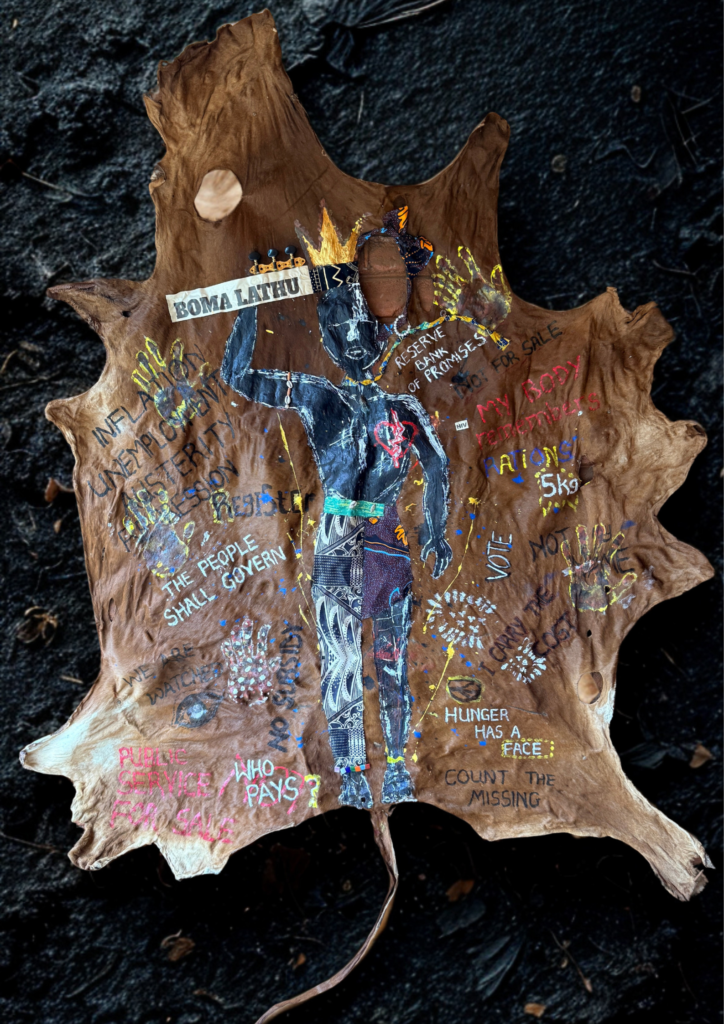
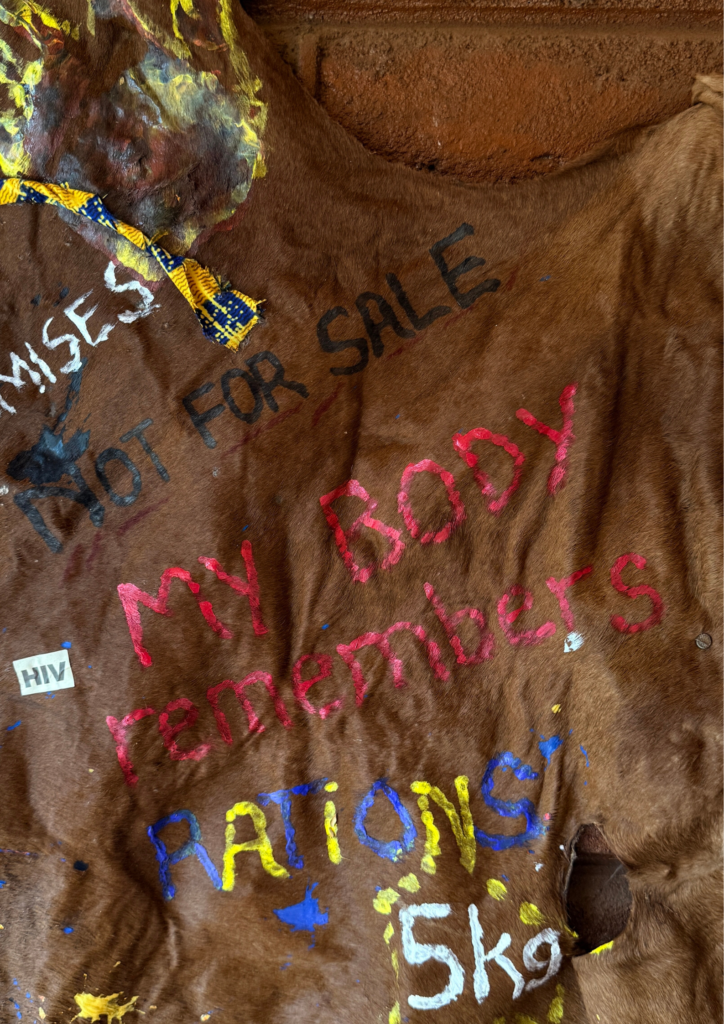
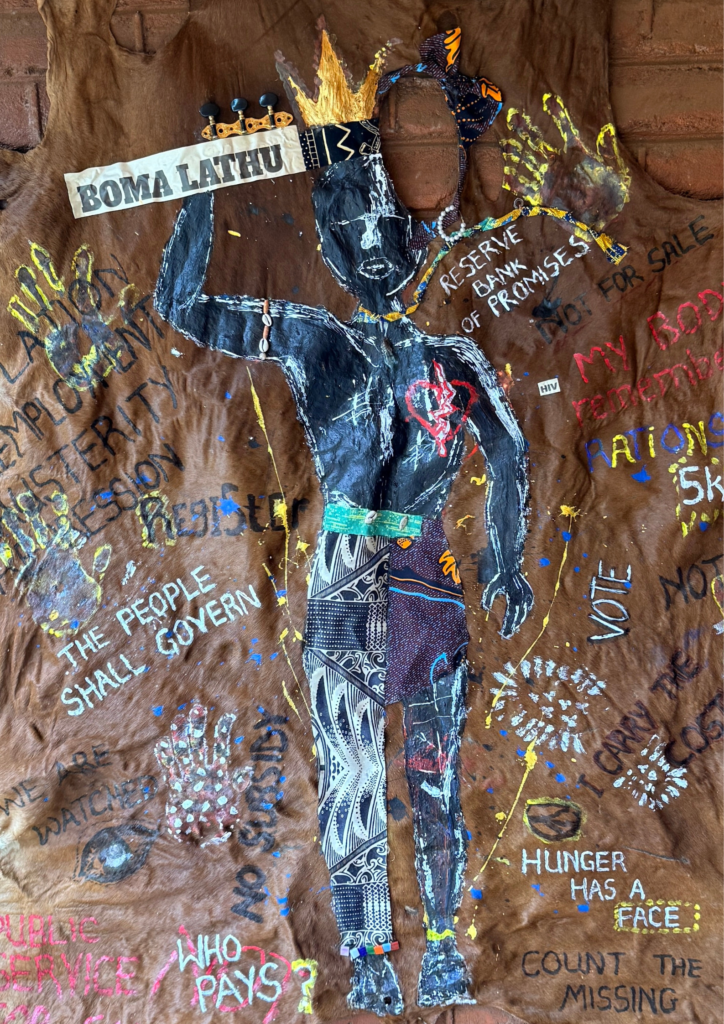
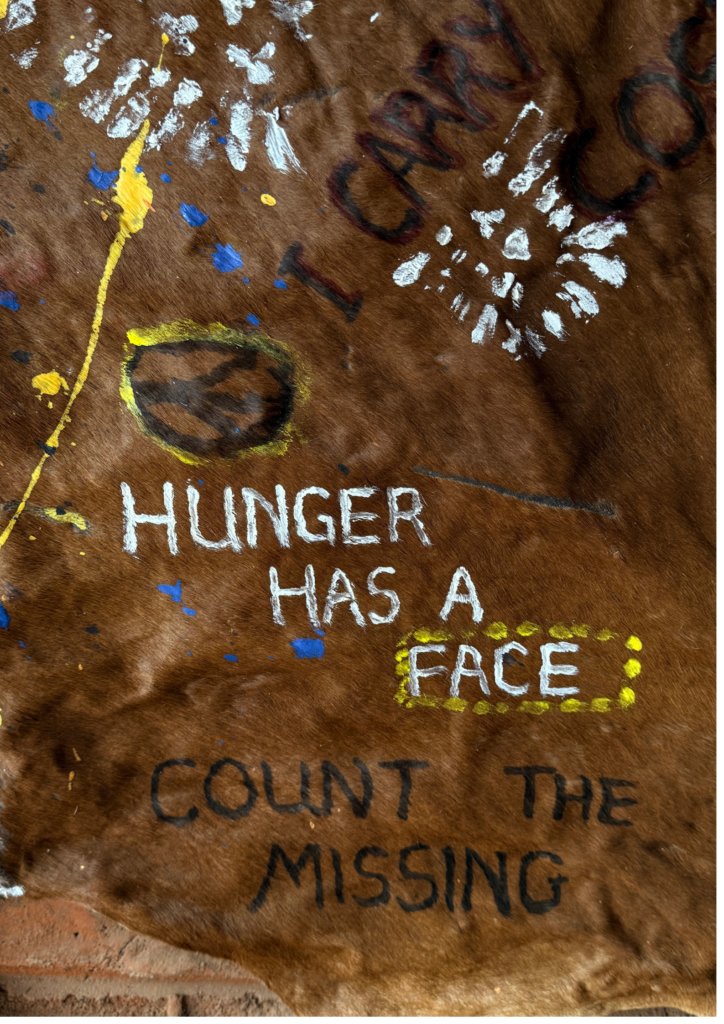
Chikopa (The Hide) is a mixed-media portrait exploring the relationship between political authority, economic systems, and the human body. Centred on a young Black male figure painted on animal hide, the work examines how ordinary citizens absorb the effects of austerity, inflation, democratic erosion, and state repression. The portrait combines semi-realistic representation with expressionist distortion, layering the body with symbolic imagery such as currency patterns, surveillance motifs, protest scars, ration symbols, fractured ballots, and marks of violence.
By using (cow) hide as both surface and concept, the project reflects on how capitalist structures and coercive governance reduce human life into something extractable, measurable, and controllable. The natural texture of the hide becomes embedded with signs of labour, hunger, policing, and resilience, creating a visual tension between vulnerability and survival.
Using a palette of earth tones, blood reds, ash greys, and muted blacks, the work evokes emotional and political exhaustion while still preserving dignity within the figures portrayed. Ultimately, the project asks viewers to consider what happens when the body becomes the primary site where political and economic failures are experienced.
MEDIUM
MIXED MEDIA ON COW HIDE
YEAR
2026
COLLECTIVE
CONCEPTUAL SOUTHERN COLLECTIVE
PLACE
BLANTYRE, MALAWI
THEMES
CAPITALISM / AUSTERITY / PHYSICAL INSCRIPTION
ABOUT THE ARTIST
Promise Nadimba
Promise Nadimba — BLANTYRE, MALAWI
Promise ‘Nadimba’ Chandilanga is a multidisciplinary visual artist and cultural practitioner whose work explores the intersection of politics, memory, identity, and social survival in contemporary African societies. Based in Malawi, her practice is rooted in storytelling that confronts systems of power.
Influenced by expressionism, African political histories, and contemporary protest aesthetics, Nadimba’s work often incorporates symbols of surveillance, currency, ration systems, protest violence, and fading national iconography. Her portraits are not simply representations of individuals, but reflections of collective experiences shaped by inequality, fear, and endurance.
CONNECT